

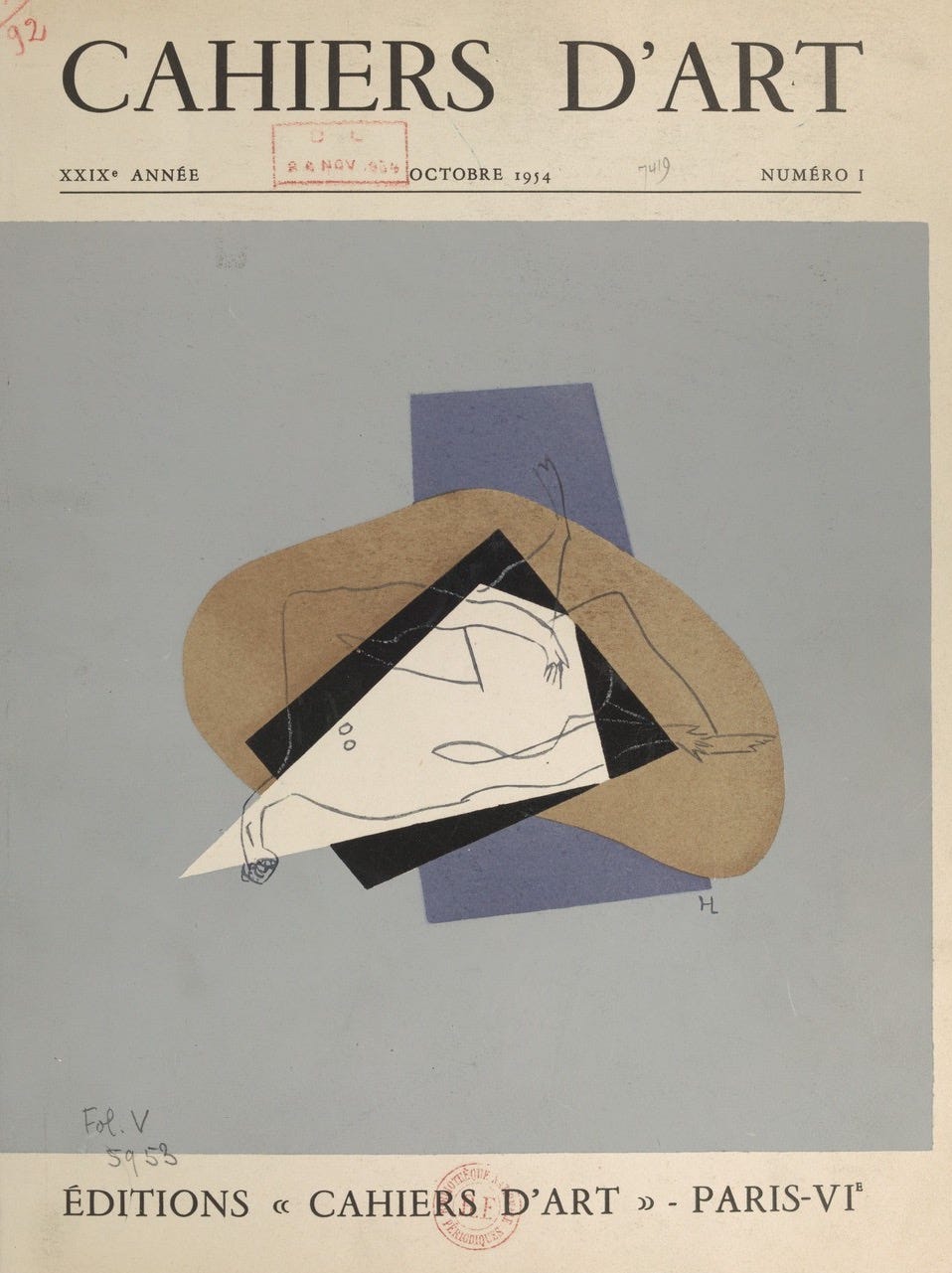
Cahiers d'Art: this modern art magazine perfectly illustrated the romanticism of the French
❥ Absolument’s Dictionary of Modern Art - Spending spring and summer learning about modern artists and art movements, together.
❥ This email may be truncated in your inbox. To make sure you are reading the entire post, please move yourself along to a web browser!
Website | Instagram | Shop Absolument | Book Recs
If you enjoy this writing and imagery, would you mind liking, commenting, or sharing it with a friend?
❥ Absolument’s Dictionary of Modern Art is a 26-newsletter series for my paid subscribers, which packs the alphabet with entrancing modern artists and movements. Read more about the series in this introductory newsletter and see the entire dictionary here!
Will you join me in learning about modern artists?
**
I’m timing this post in celebration of my wedding anniversary today, and remembering all of the swirling, wonderful happiness of that day in France two years ago!!!!


The longer I live in France, the more I’m convinced that French people—in general—are actually not that romantic (my sweet husband is an exception). They are normal humans just like the rest of us. But every time I translate a writing from Cahiers d’Art, I take back my bold statement!
In this newsletter, I’m sharing excerpts that show exactly why the French have received the best PR ever: the honor of being defined as romantics. Really, so much of it can be tied directly back to the country’s history of art and literature.
Even modern art had its beginnings in France, although the exact moment the movement started is often debated. How very French! Did modern art begin in 1863, when Édouard Manet painted a portrait of a Parisian prostitute, Olympia? Or was it the same year, 1863, at the Salon des Refusés exhibition? Manet was involved then, too. Some records are stubborn in thinking modernism started as early as the 1830s, also in France. Others say, “No, it happened a little later!” When Matisse painted Woman with a Hat (Femme au Chapeau 1905), or when Picasso finally showed Les Demoiselles d’Avignon (1907). Both paintings have ties to Paris.
No matter when you think modern art began, we know that the French—and Cahiers d’Art—helped the movement stay alive.
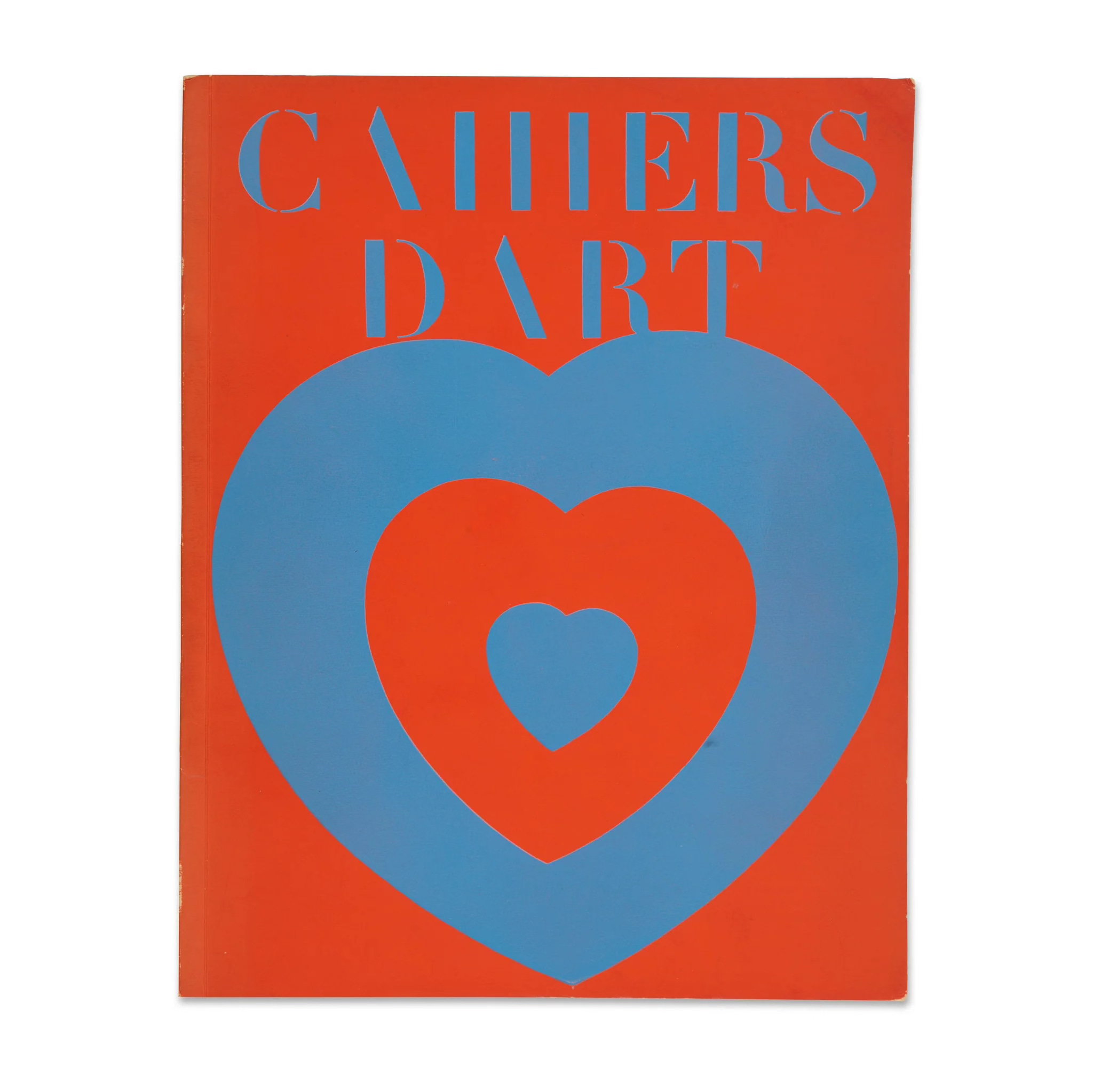
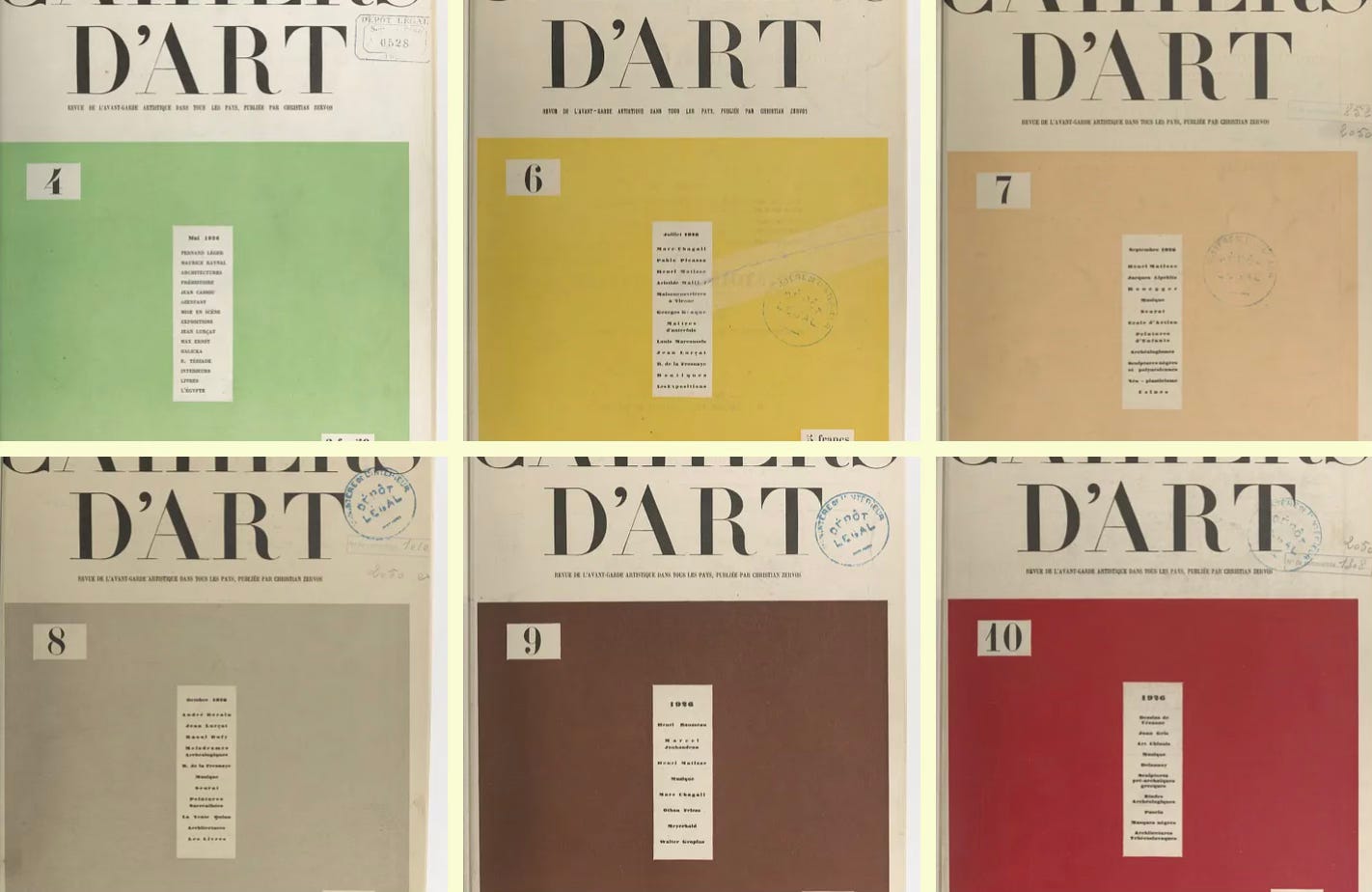
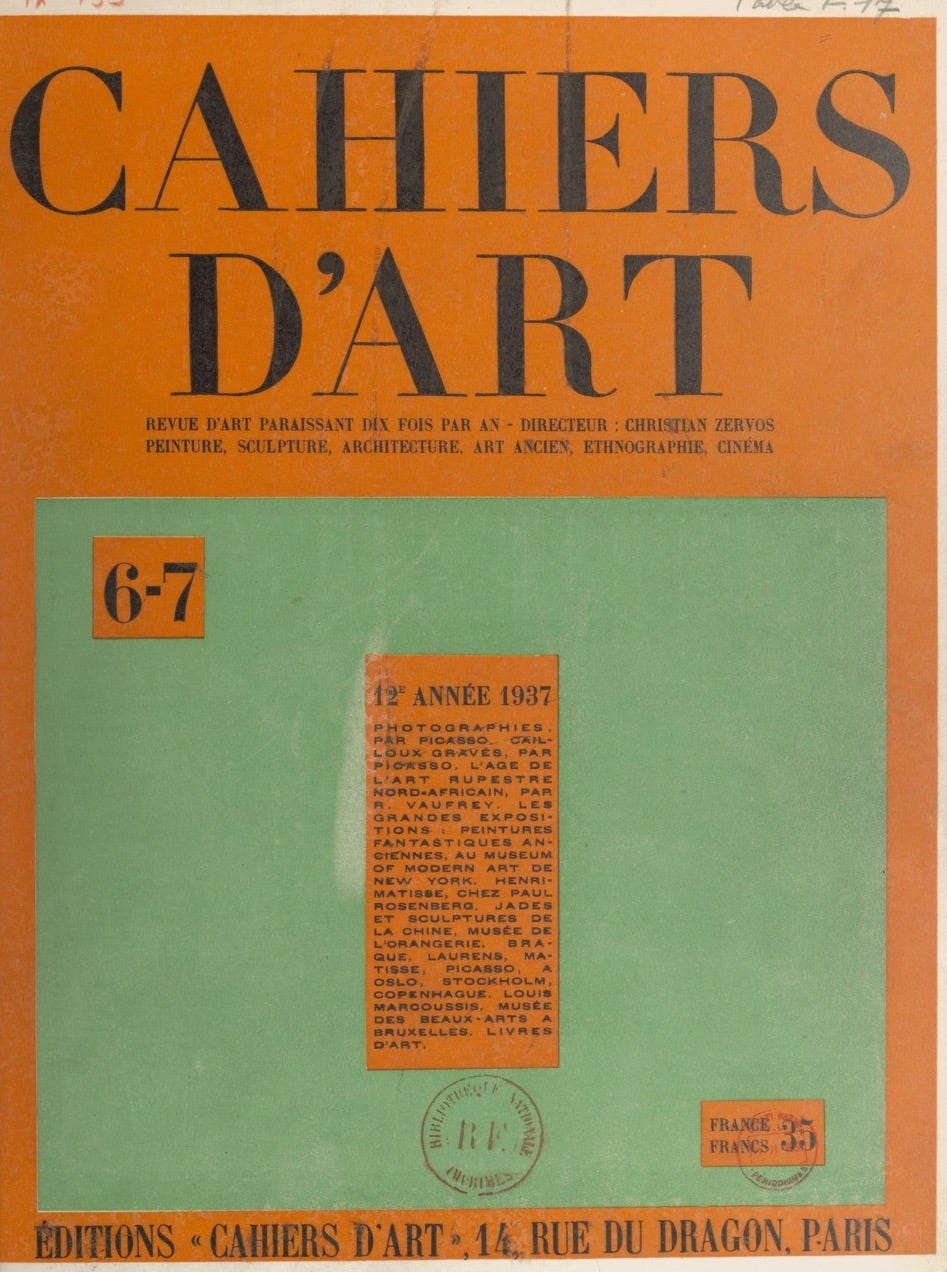
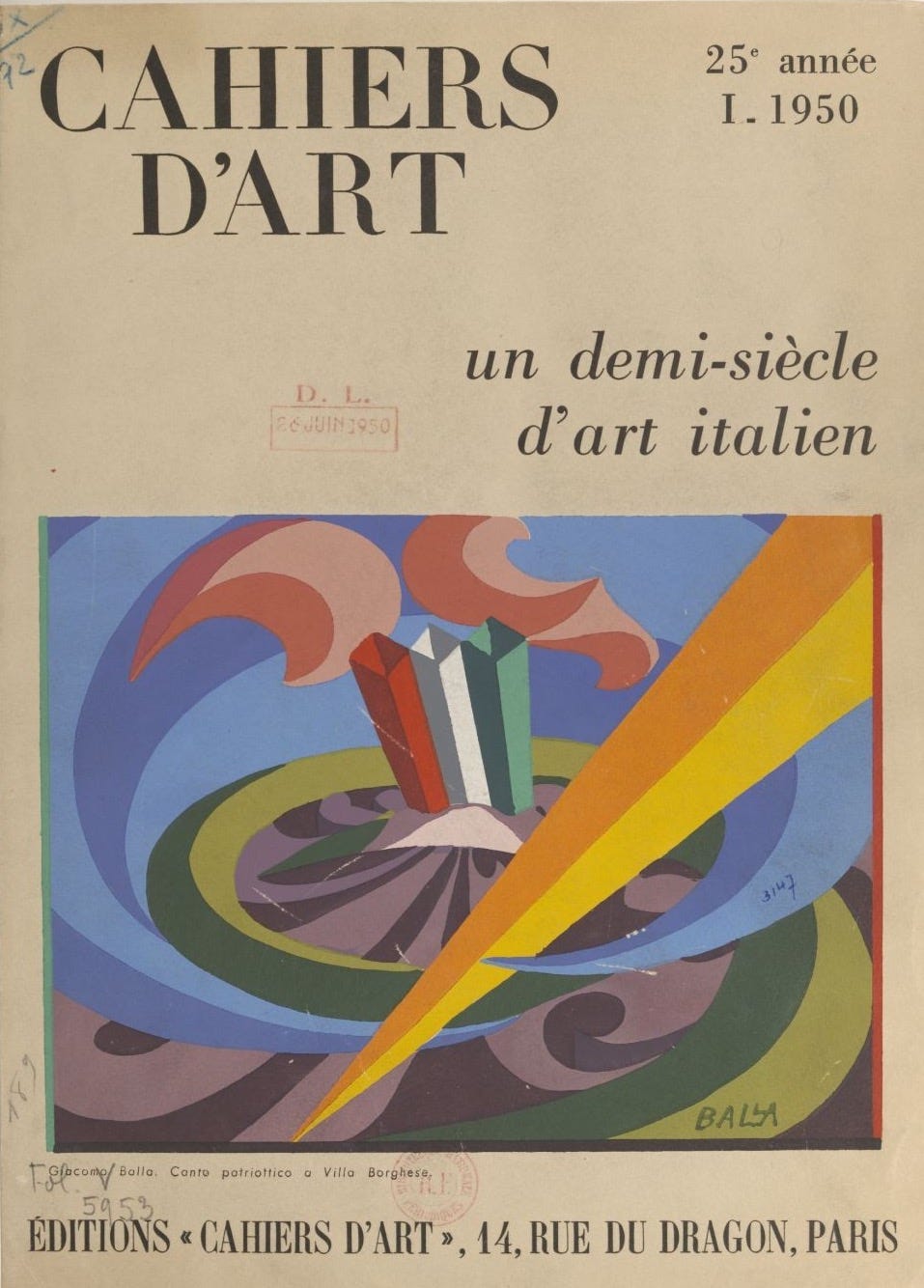
Cahiers d’Art (translated from French: Notebooks of Art) was born in 1926 and founded by Christian Zevros, an art critic. Zevros ran the magazine in Paris until 1960—except during the war years of 1940-43. He printed just three issues short of one hundred.
The journal promoted the best of the best in its first issue: Picasso, Matisse, Léger, Chagall, de Chirico, Le Corbusier, Frank Lloyd Wright, Egyptian temples, and prehistoric cave paintings. And from that point onward, its rigor and absolute beauty continued so, so strongly. Below are a few articles (that I’ve translated from French to English) about artists written in a way that is completely poetic and so French.
**
Picasso: a green bean vendor
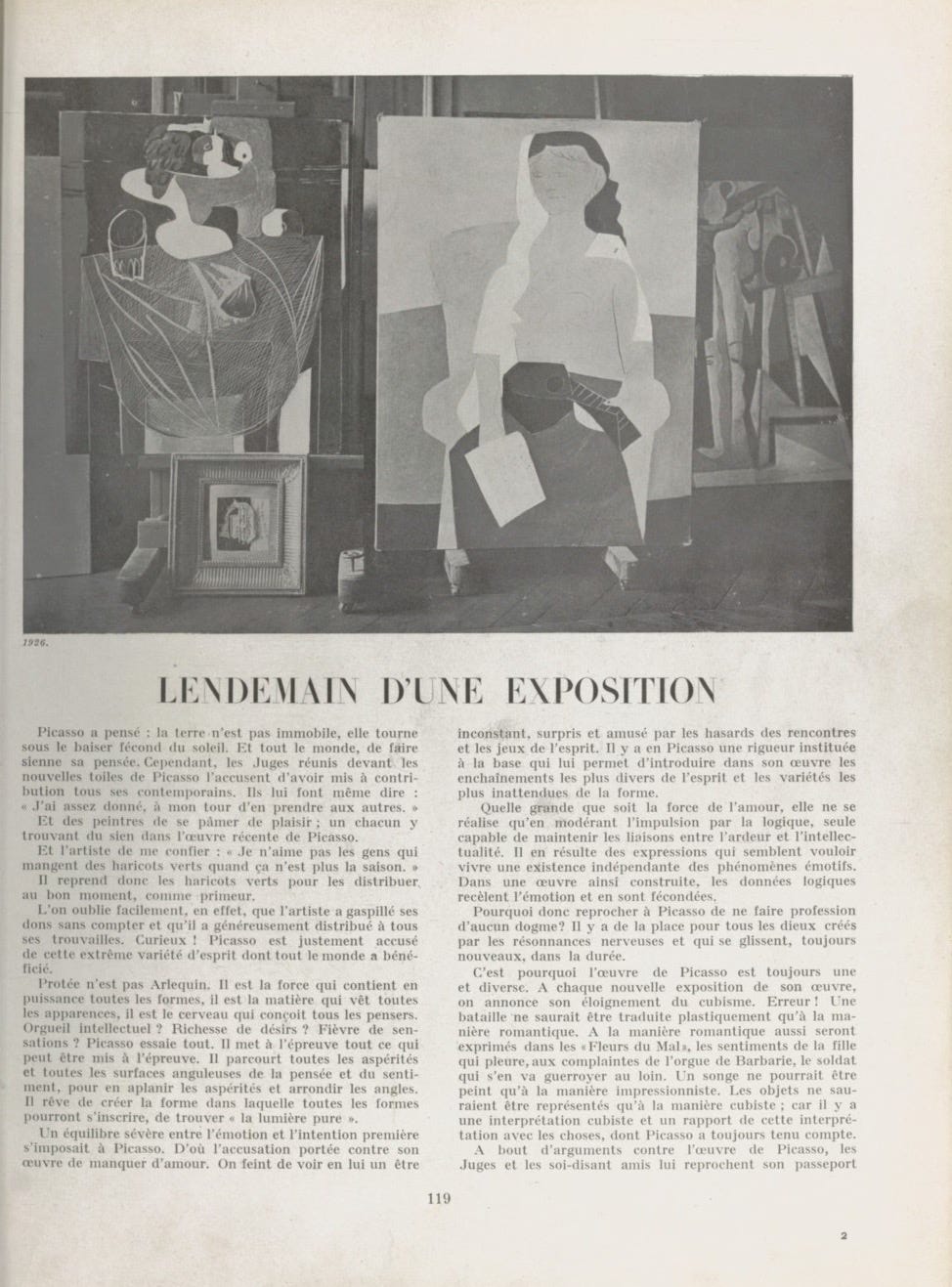
The Day After an Exhibition by Christian Zervos
“Picasso thought the Earth is not still, it runs under the fertile kiss of the sun. And everyone adopted his thought. However, the judges gathered before Picasso’s new canvases accused him of having drawn on all his contemporaries. They even had him say: ‘I have given enough, it’s my turn to take from others.’
And painters swooned with pleasure, each finding something of their own in Picasso’s recent work.
And the artist confided in me: “I don’t like people who eat green beans when they’re no longer in season.” So he took back the green beans to distribute them, at the right time, like the vegetable seller.”
Marc Chagall: a painter, born romantic
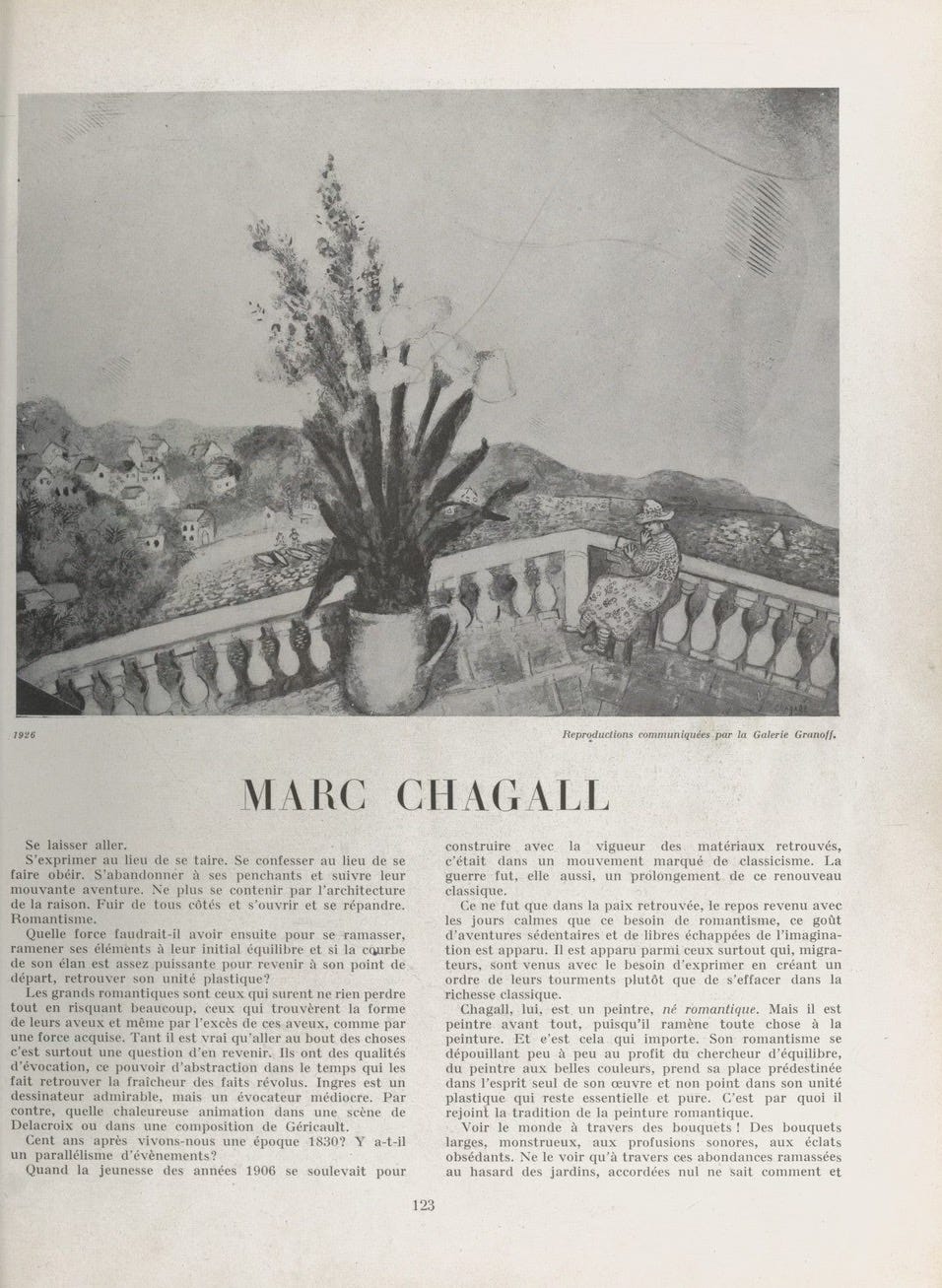
Letting go.
Expressing oneself instead of remaining silent. Confessing instead of being obeyed. Abandoning one’s inclinations and following their shifting adventure. No longer restraining oneself with the architecture of reason. Fleeing in all directions and opening up and spreading out. Romanticism.
What strength would it then take to gather oneself, to bring one’s elements back to their initial equilibrium, and if the curve of one’s momentum is powerful enough to return to its starting point, to rediscover one’s plastic unity?
The great Romantics are those who knew how to lose nothing while risking much, those who found the form of their confessions, and even, through the excess of these confessions, as if by an acquired strength. So true is it that going to the end of things is above all a question of returning from them. They possess evocative qualities, this power of abstraction in time that allows them to rediscover the freshness of bygone events. …
Chagall, for his part, is a painter, born romantic. But he is a painter above all, since he reduces everything to painting. And that is what matters. His romanticism, gradually shedding itself in favor of the seeker of balance, the painter of beautiful colors, takes its predestined place in the spirit alone of his work and not in its plastic unity, which remains essential and pure. This is how he rejoins the tradition of romantic painting