

This email may be truncated in your inbox. To make sure you are reading the entire post, please move yourself along to a web browser!
Website | Instagram | Shop Absolument | Book Recs
If you enjoy this writing and imagery, would you mind liking, commenting, or sharing it with a friend?
❥ Absolument’s Dictionary of Modern Art is a 26-newsletter series for my paid subscribers, which packs the alphabet with entrancing modern artists and movements. Read more about the series in this introductory newsletter and see the entire dictionary here!
Will you join me in learning about modern artists?
**
Modern art is rooted in a long history of rebellious, rule-breaking people expressing their creativity in never-been-done-before ways, which is why I was so drawn to it in the first place. One of the rules some modern artists broke had to do with the titles of artworks. Imagine the frustration and confusion that artists began causing when they first refused to name their paintings, sculptures, drawings, etc.! When museum visitors tilted their heads in confusion at new styles of painting, looking to the title card for clues of what they were looking at, only to find the word Untitled.
This newsletter will cover the reasons why modern artists chose to keep us viewers in the dark by calling their artworks Untitled.
1. The artist wanted to prevent others from having any preconceived ideas about the artwork
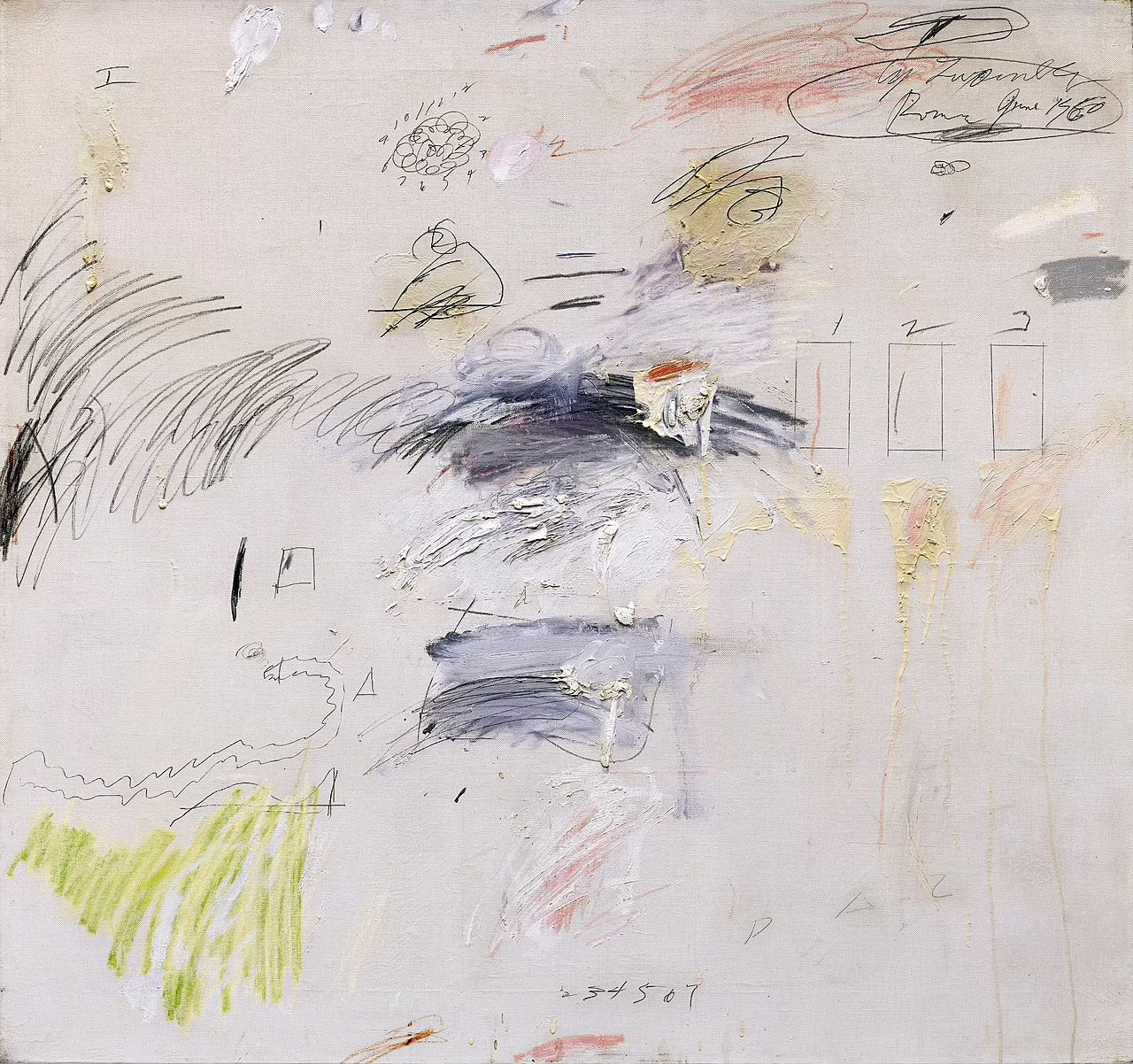
The title of an artwork is often one of its most enormously important aspects. Through words, the title gives an artist the power to guide their viewer down various paths of subject matter, emotion, timing, setting, and narrative. But by using the name Untitled, the artists were experimenting with a phenomenon: if visitors aren’t explicitly told what they’re looking at, an entire world of imagination can open to them! It also allows the artist’s true intentions and inner world (which they may prefer to keep more private) to remain concealed.
If the above untitled Cy Twombly painting were named something more concrete, like The Wave at Sundown, would you view it differently? I absolutely would! I’d immediately begin to search for the wave and the sunset. In my imagination, Twombly’s dark scribbles and the thick mass in the middle of the painting would form the ocean. The warm colors above would represent the sky, and the green markings on the lower left would become a grassy hill in the foreground. The title would lead me to organize together all of my associations of the physical world and my personal experiences (i.e., what I know about waves and sundown) to create my own story about what’s happening on the canvas in front of me.
Because the painting was untitled, I came up with this imaginative idea on my own. Another person looking at the painting likely would have seen something completely different; maybe they’d feel an emotion rather than see an image. In the end, Twombly created an infinite number of experiences from one painting, just by choosing the most generic title available to artists.
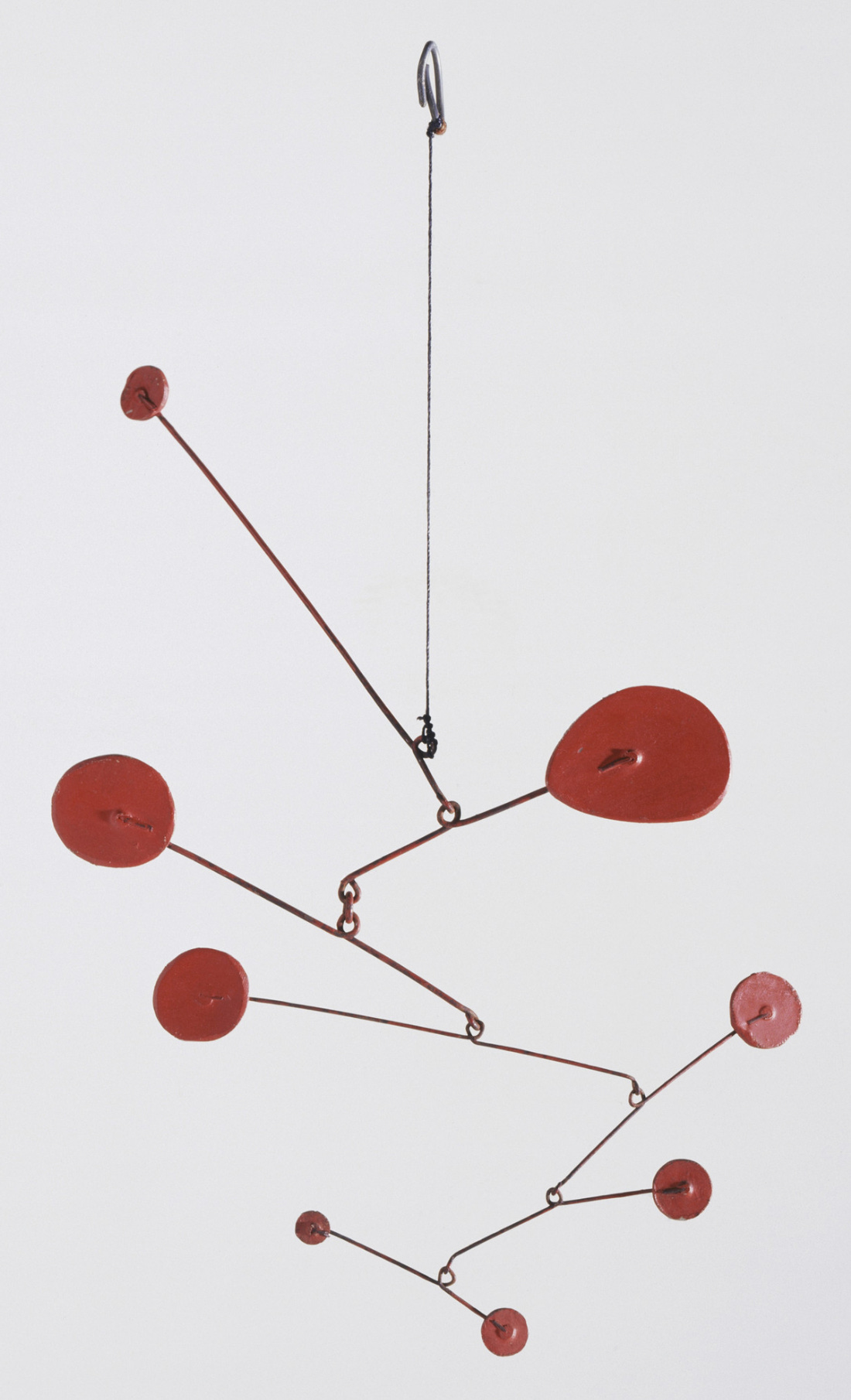
Especially in the world of abstract painting, drawing, and sculpture, modern era artists sought to keep forms as unattached to reality as possible. Leaving work untitled magnifies this disconnect! Rather than attaching any sort of physical description to his sculpture above, Calder invites viewers to watch it rotate, shimmy, drift, and dangle in the air as if by magic. In the moment, viewers are entranced with their experience of the sculpture, totally unworried about what it means.
Some artists—like Georgia O’Keeffe—began to dislike the interpretations that the public gave to their artworks. In the case of O’Keeffe, she began to paint less abstractly by adding more recognizable objects to her pieces, in hopes that they would be sexualized less often.