

Suzanne Valadon's Parisian atelier and other notable "V" women artists
❥ Absolument's Dictionary of Modern Art - Spending springtime learning about modern artists and art movements, together.
❥ This email may be truncated in your inbox. To make sure you are reading the entire post, please move yourself along to a web browser!
Website | Instagram | Shop Absolument | Book Recs
If you enjoy this writing and imagery, would you mind liking, commenting, or sharing it with a friend?
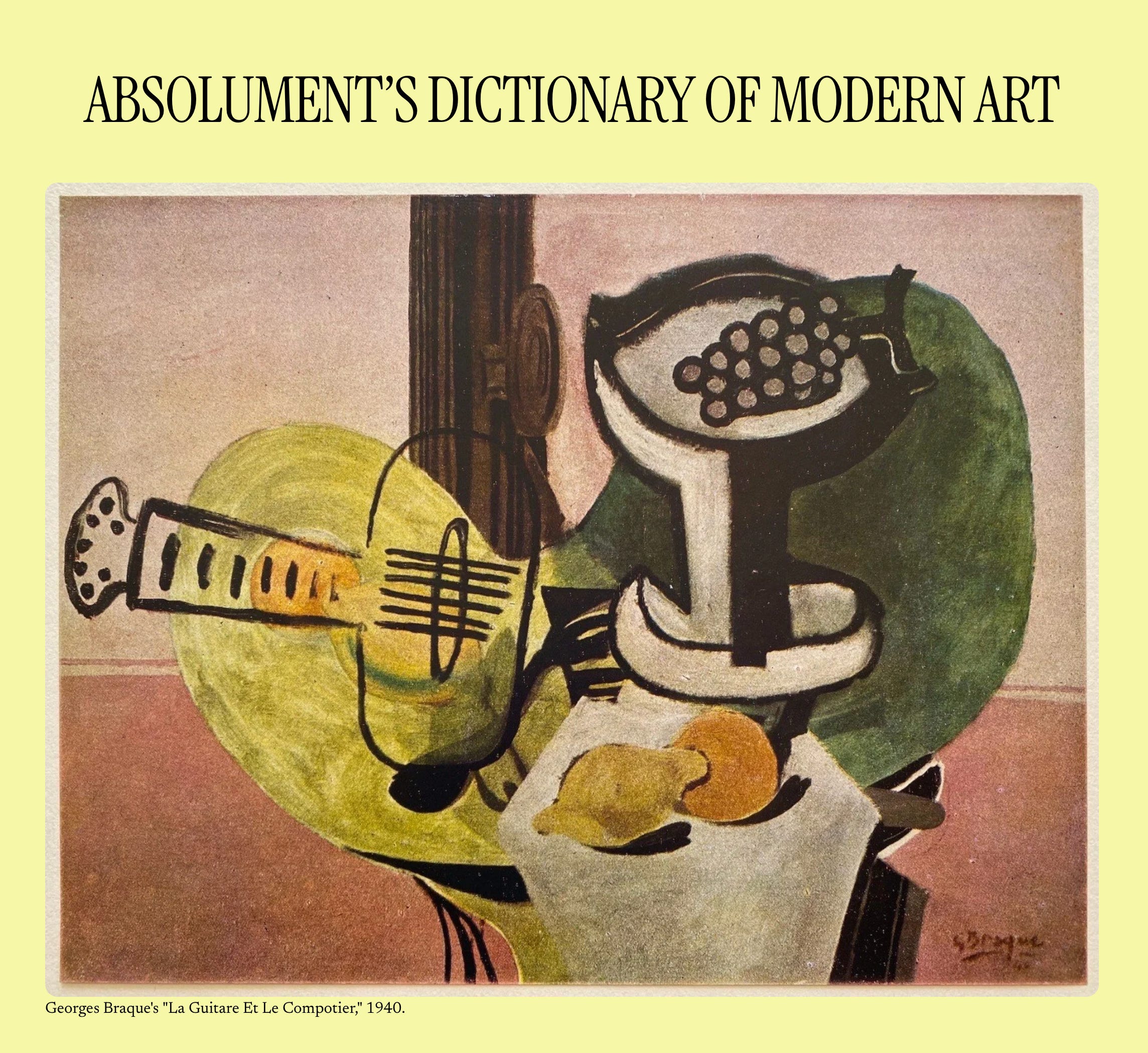
Every week from February through May, I’ll be sharing an art-centric newsletter for my paid subscribers: Absolument’s Dictionary of Modern Art. Each writing will focus on an artist or movement from the modern era, mimicking entries of a dictionary or encyclopedia. You can read more about the series in this introductory newsletter.
Will you join me in learning about modern artists? I hope you will!
There are a lot of VERY IMPRESSIVE women modern artists whose last names begin with V. This post is going to be packed—and for that, it’ll be one of the newsletters open to all subscribers, free or paid.
Suzanne Valadon
b. 1865 in Bessines-sur-Gartempe, France | d. 1938 in Paris, France
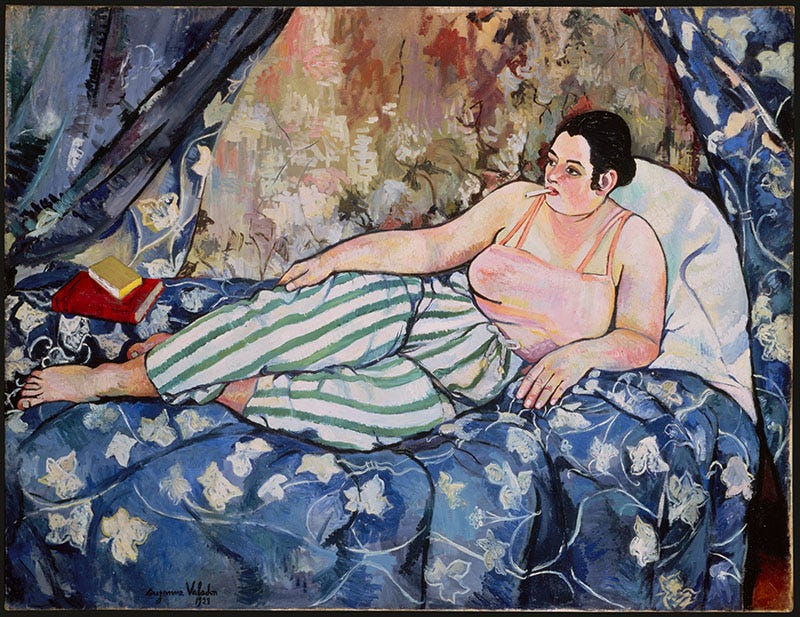
“Painted in 1923 by Suzanne Valadon (1865–1938), The Blue Room reinterprets the codes of the orientalist odalisque, only to subvert them. Here, a woman reclines in her private space—not nude, but dressed in pajamas, smoking nonchalantly, seemingly free from the male gaze. A resolutely modern portrait of a woman, the painting is emblematic of Valadon’s independent style.” - Le Centre Pompidou, translated from French
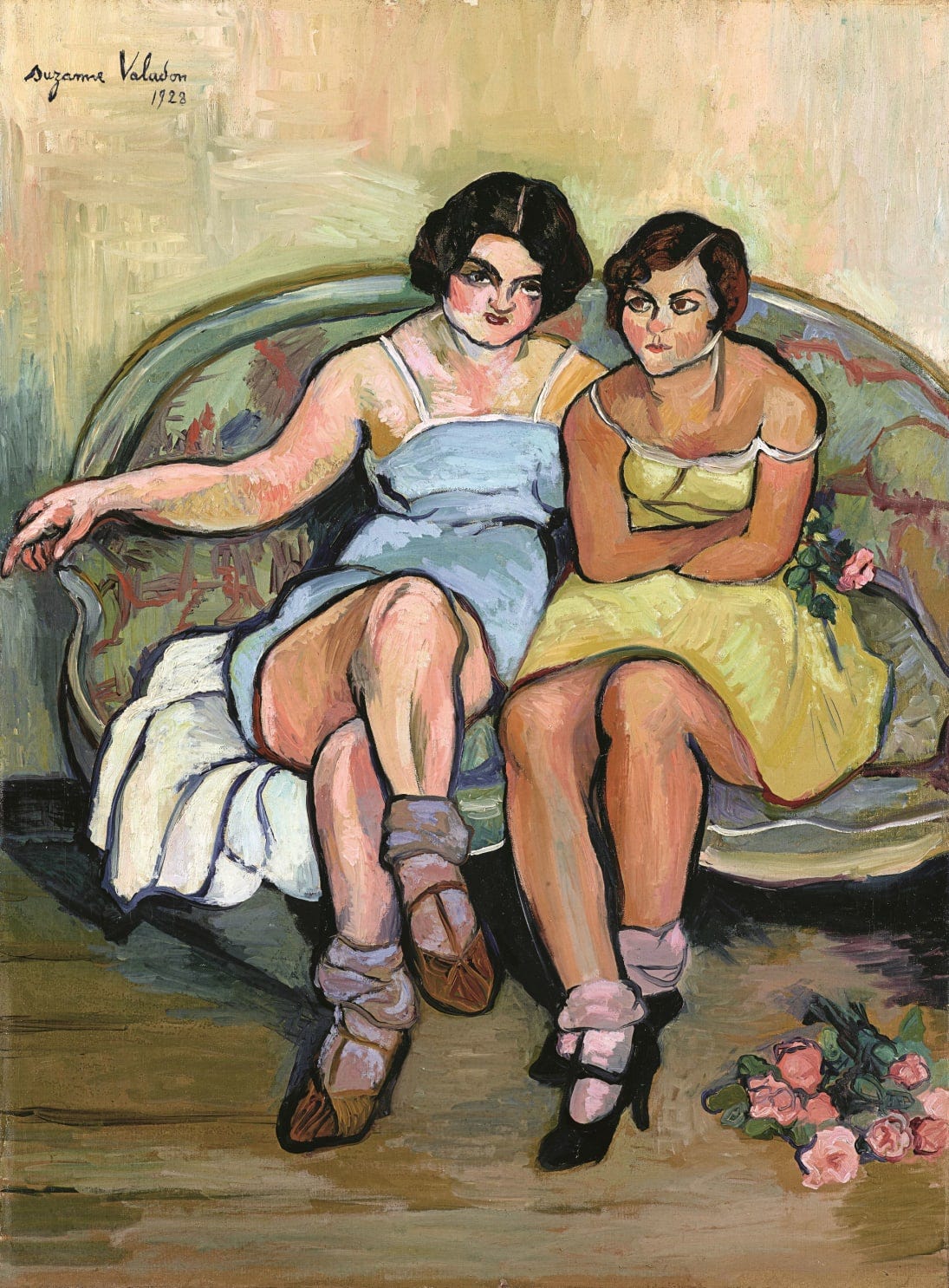
Julien, a resident of Paris and author of the wildly popular art newsletter, Cool Stories About Art, is launching today’s dictionary entry about Parisian painter Suzanne Valadon.
As I read his words about Valadon, my mouth was open in awe. I visited her home and studio in Paris in October and didn’t yet grasp all of her life’s twists and turns before arriving—or after leaving!
What Julien finds absolutely fascinating about Suzanne, her art, and her life:
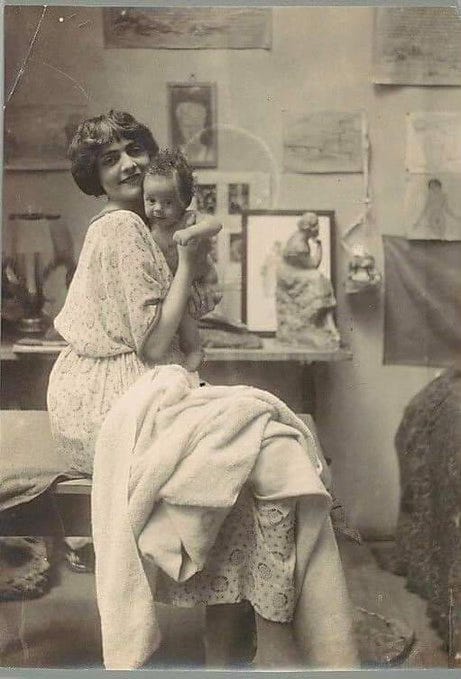
1. In January 1893, Suzanne was at a cabaret with her lover. Pianist Erik Satie, 27 years old, sat at their table. Within hours, he fell madly in love and proposed marriage. She said yes. But it was 3 AM, impossible to find a priest. The next day, they moved into neighboring rooms. For six months, Satie lived obsessed. He called her “Biqui,” gave her sausage necklaces, and composed music for her. Then she left without explanation. Satie was devastated. Until his death 30 years later, he wrote her hundreds of passionate letters he never sent. It was the only love affair of his entire life.
2. 15, Suzanne achieved her dream: she became a trapeze artist at the Molier circus. She loved this life. Artists came to watch the shows; it was a world of colors and freedom. Six months later, during rehearsal, she fell. Serious back injury. Her acrobat career was over. Forty years later, she still said it was the greatest sadness of her life. Without that fall, she might have stayed with the circus forever. Instead, she became a model for painters.
3. In 1883, Suzanne gave birth to a son she named Maurice. Everyone asked, "Who is the father?” She wouldn’t say. Maybe she didn’t really know. Renoir, for whom she posed nude? Toulouse Lautrec, her lover? Painter Puvis de Chavannes? Eight years later, a Catalan painter, Miguel Utrillo, recognized the child and gave him his name. But no one would ever know the truth.
4. Suzanne never set foot in an art school. She observed painters while posing nude for them. She watched their gestures, their techniques, and she learned in silence. In 1894, she became the first self-taught woman admitted to the prestigious Société Nationale des Beaux Arts. An achievement. But Suzanne was not a proper artist: she smoked a pipe, drank heavily, and fought in the streets of Montmartre. One day, she took dozens of poor children to the circus. She was like no one else.
You may also follow Cool Stories About Art on Instagram. Merci mille fois, Julien !
An earth-moving visit to Suzanne’s Parisian home and studio
Le Musée de Montmartre, painted a rosy pink, settles itself into its three-story frame on a tucked-away, cobblestoned street in Montmartre, the 18th arrondissement of Paris. While visiting, you’re only a few turns away from Le Sacré-Cœur. The building, constructed in the 17th century, is one of the oldest in the neighborhood.
At one point in time, an impressive list of artists had their homes and/or studios at 12 rue Cortot, including Auguste Renoir, Émile Bernard, Raoul Dufy, Charles Camoin, Maurice Utrillo, and the enigmatic Suzanne Valadon.
In 1960, a museum took up residence in the space, with two intentions: to become an art-centric organization and to restore the interiors to reflect its historically significant inhabitants. Inside, there are gallery spaces that showcase the museum’s permanent collection and rotating exhibitions; a surrounding cafe and enclosed garden dedicated to Impressionist Pierre-Auguste Renoir (imagined based on his paintings of the grounds); and the reconstructed home and studio space of Suzanne Valadon, her young son, Maurice Utrillo, and her second husband, André Utter.
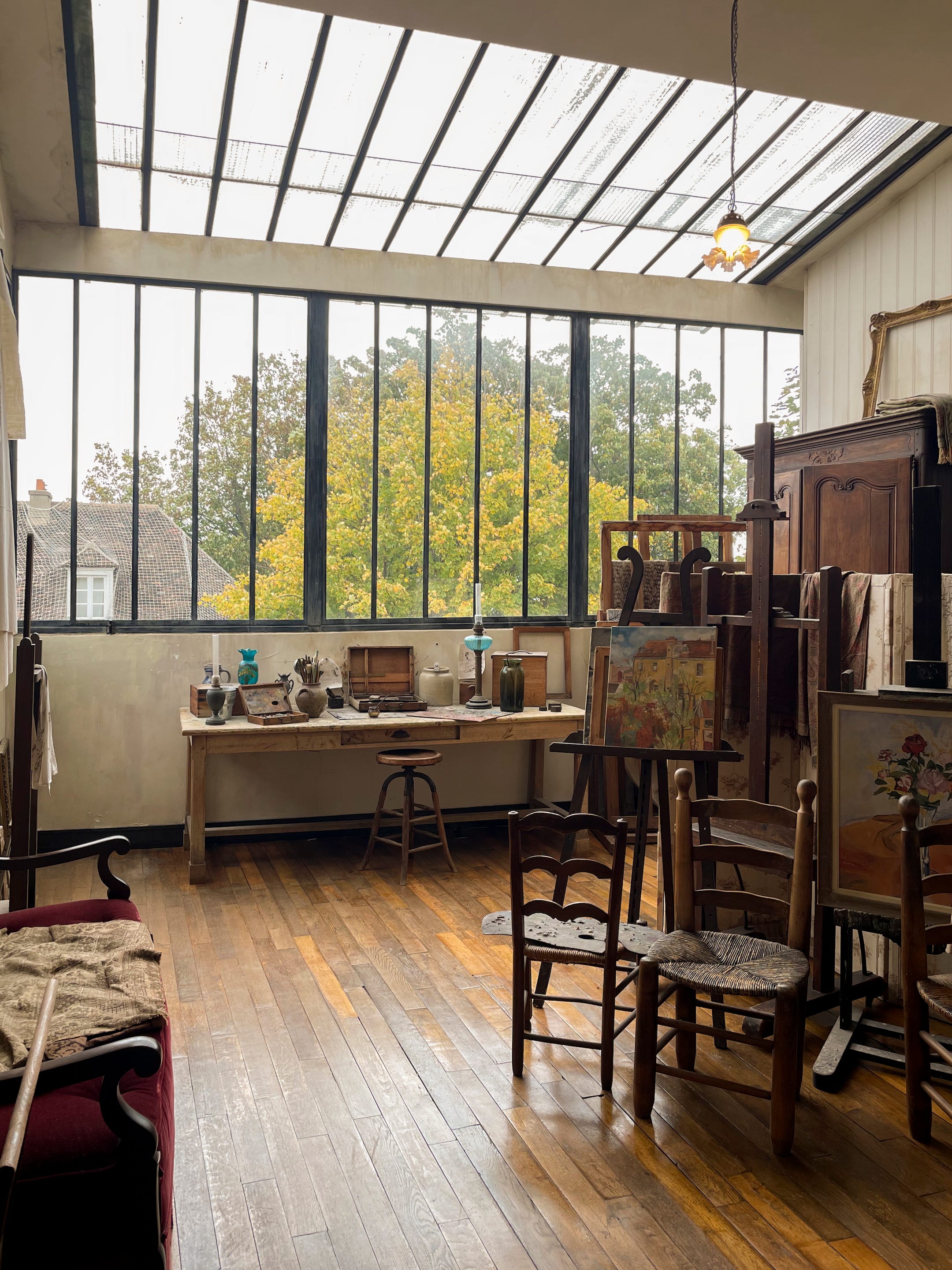
When I visited last October, I spent a considerable amount of time in Suzanne’s atelier alone, snapping photographs* and absorbing details I could later admire and dream about. For a few of those minutes, I shared the room with a girl who was around ten years old. She was soaking in the space the same way I was, getting to know Suzanne through the woven-seated chairs, the layers of oil paint on canvases, the empty art frames, and the various patterned textiles that were draped over scattered objects. The fierceness of her observation was obvious, and I wondered if Suzanne shared a similar spirit.
The staged scene felt accurate to the glimpses of Suzanne’s life that we receive in old photographs. The chairs were angled toward the canvases in a habitat that felt as bohemian as the characters and environments of Valadon’s paintings.
Much of Suzanne Valadon’s time was spent in the orbit of a very male-dominated Montmartre. Some sources note that Valadon moved freely through parts of the neighborhood’s nightlife that respectable bourgeois women avoided—including brothels or cabarets. Her fascination was with the women as characters, and in the way they moved, clothed themselves, and inhabited space. Her intent was to capture them in everyday dress and natural poses—nothing positioned for the male gaze. This portrait style was also influenced by her time spent sitting as a nude model for painting students.
*Unfortunately, my camera’s memory card corrupted at the end of my trip, so I lost all of these visual souvenirs. I do have a few phone shots that I took haphazardly between admiring and shooting with my Fujifilm.
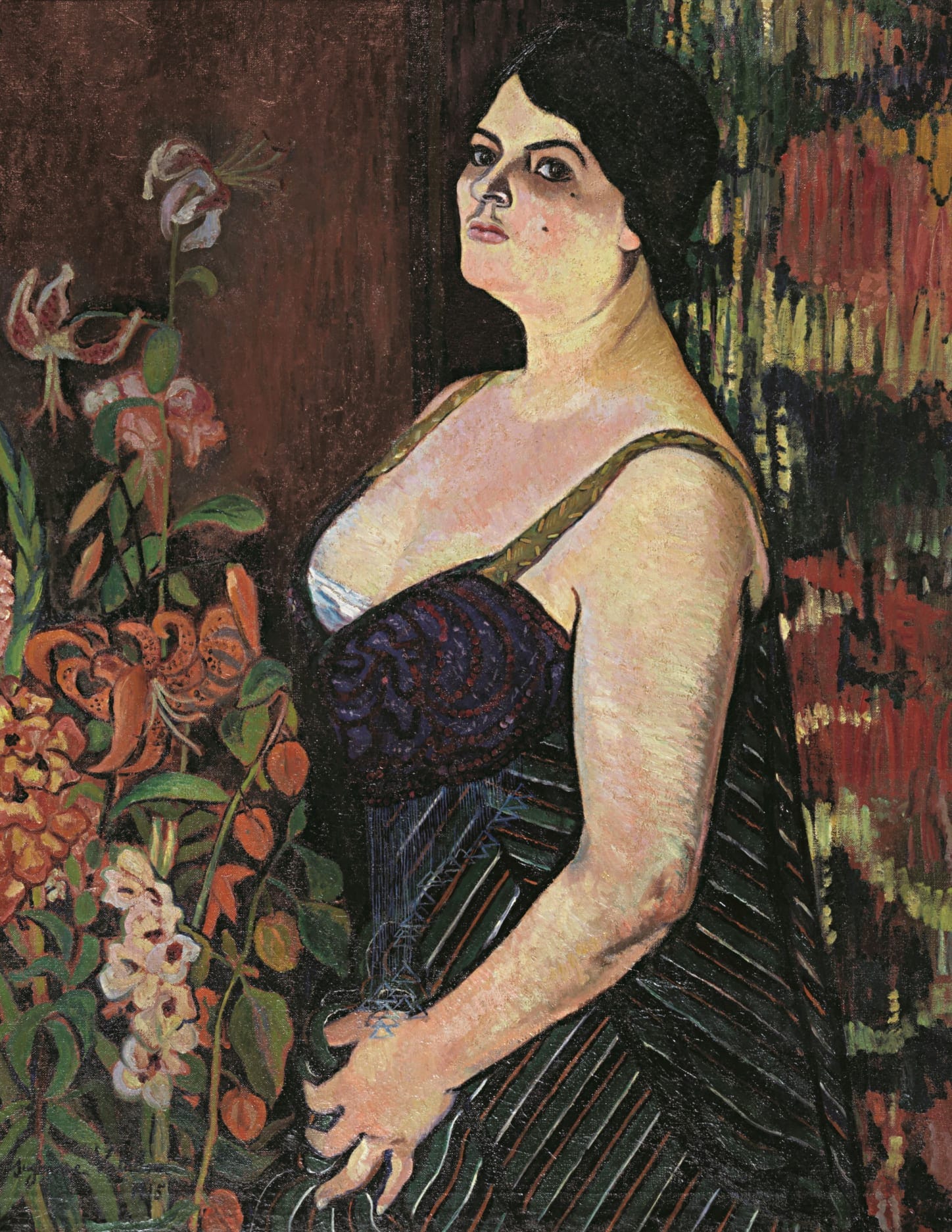
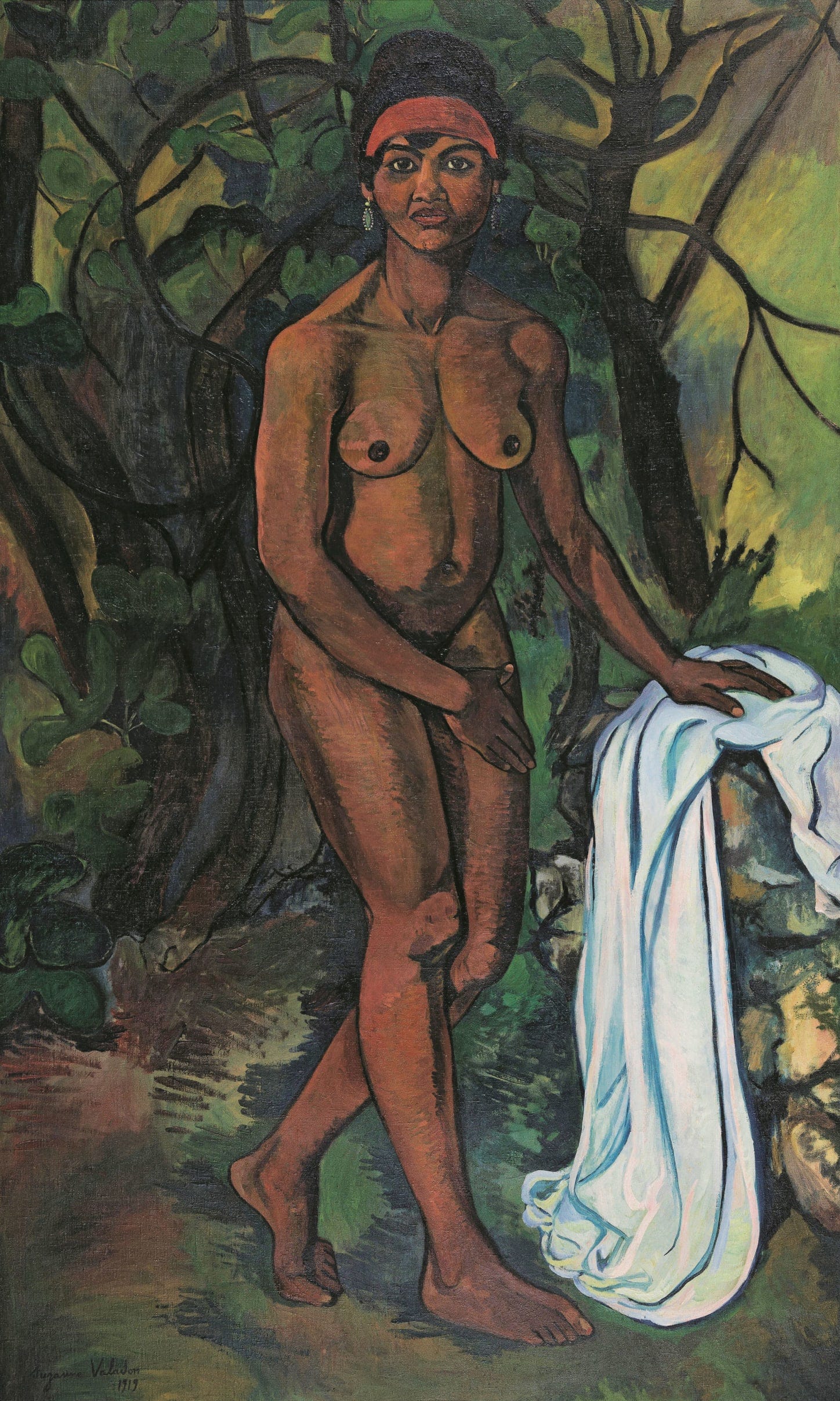
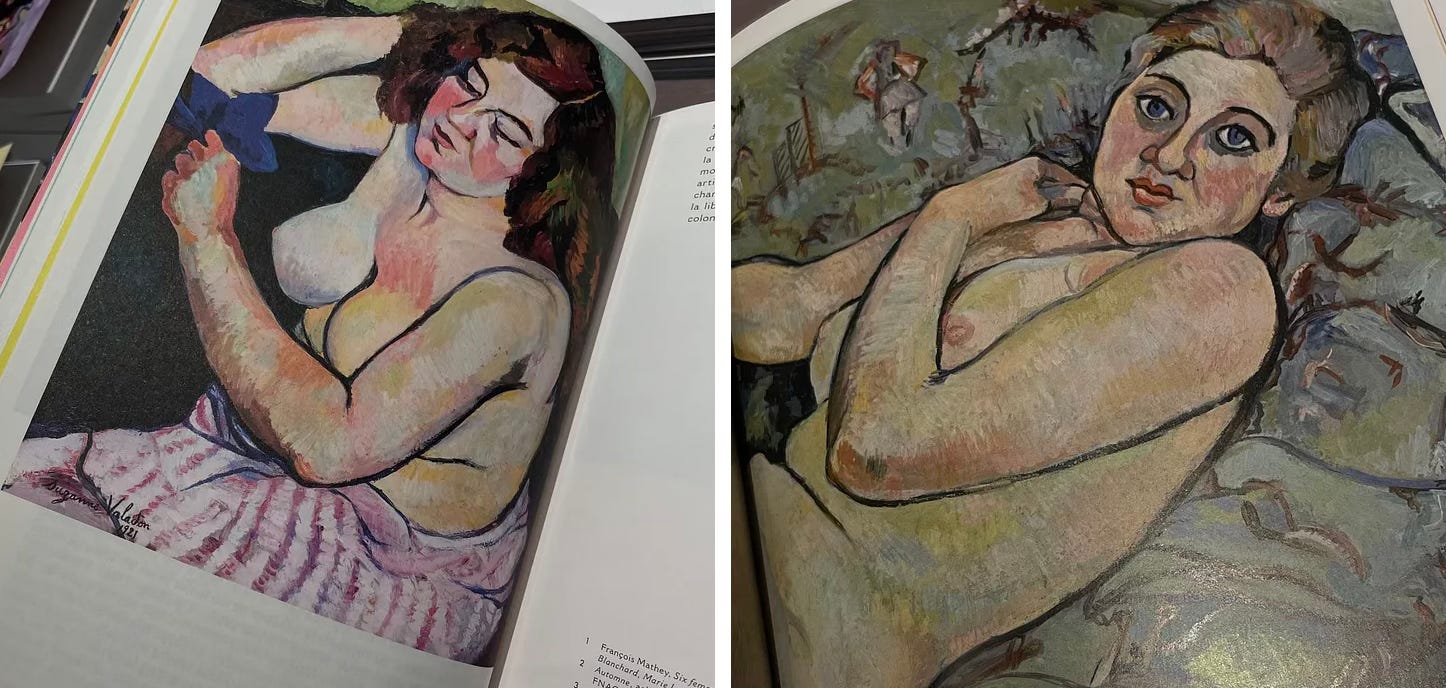
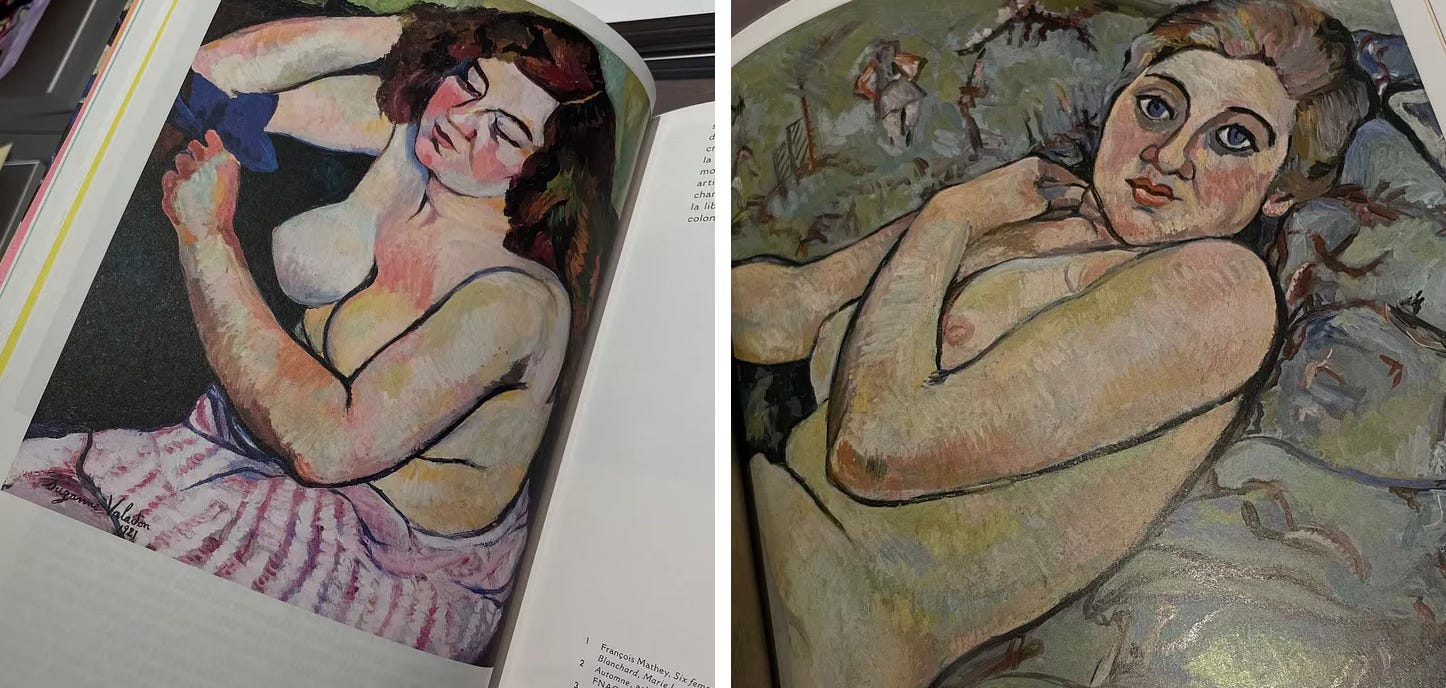
Louise Darblay described, for Art Basel, Valadon’s models: “Whether using anonymous models or her own reflection, Valadon painted women of all ages and all body types with a constant desire to capture their truth, without idealizing or hiding anything. Whether they are washing, lying down, getting dressed, having their cards read, dreaming, or returning our gaze, they always appear free and in full control of their bodies.”
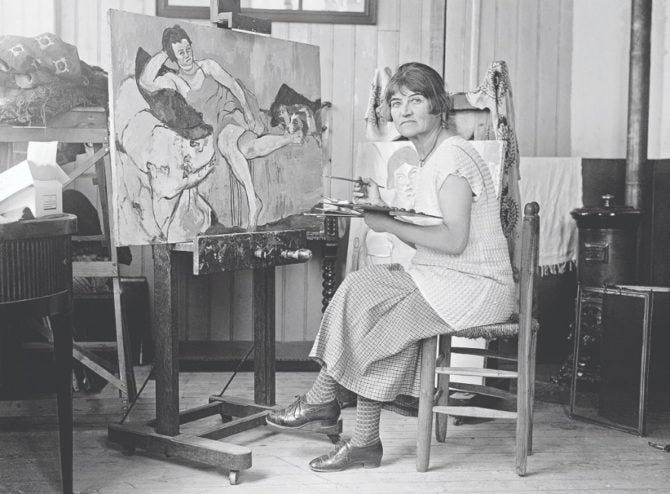
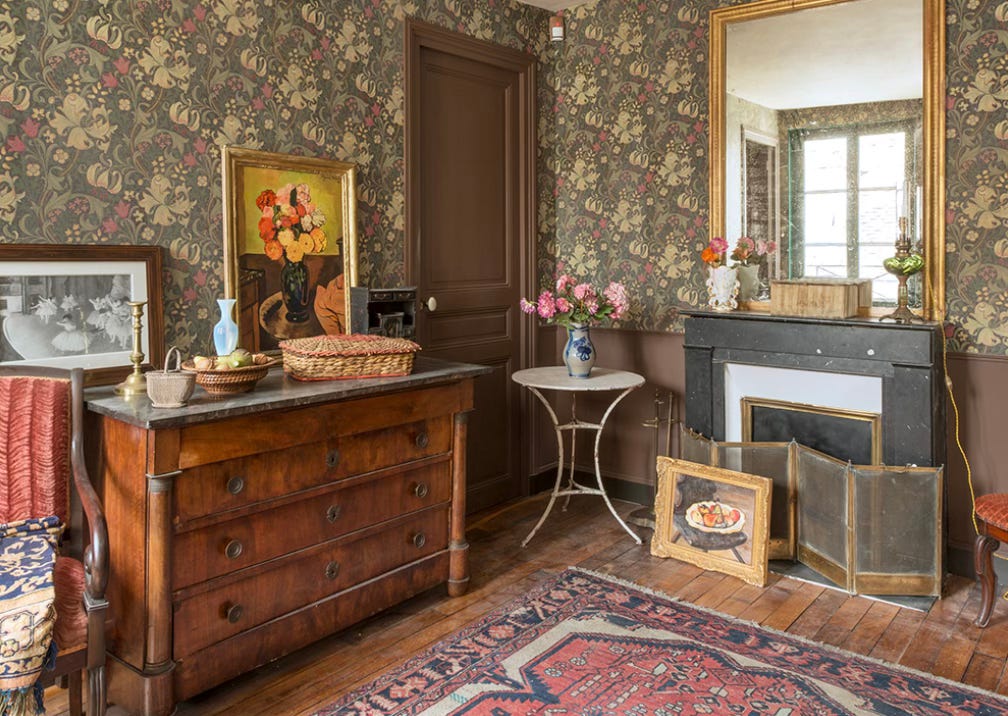
If you find yourself in Paris, I urge you to visit Suzanne’s home. You’ll find yourself suspended in a Montmartre of this very specific time. If you’re lucky, you’ll be able to peacefully eat a croissant (from the on-site Café Renoir) in the gardens, slightly removed from the madness of Paris.
Related Notes:
While at the Grand Palais a few days later, I flipped through a Suzanne exhibition catalog from a previous show at the Centre Pompidou. I still regret not taking it home! Also dying to read these two Suzanne biographies: The Valadon Drama and Renoir’s Dancer.

In a 1958 New York Times article, Suzanne’s daughter-in-law, Lucie Valore Utrillo, shows off the Parisian apartment she shared with her husband. Lucie declared, in French, that she was “born a decorator.” What did she choose to hang on her walls? Black-and-white newspaper photographs show “La Salle Valladon” or “the Valladon Room” lined with paintings by the late Suzanne Valadon. The chairs in sight are wooden, and frames are displayed at angles and in a Salon-style arrangement. What a sentimental tribute.
I think Suzanne would have felt at home there, too.
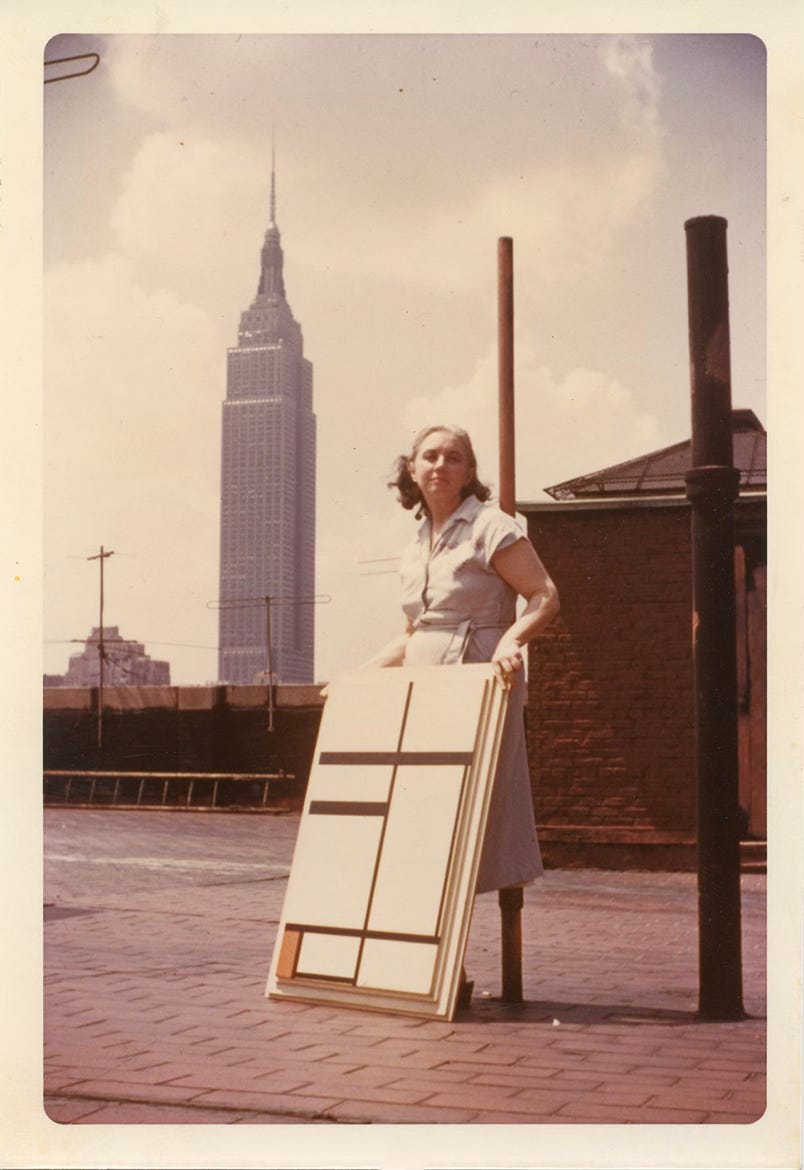
Charmion von Wiegand (1896–1983) was an American painter, art critic, and translator whose work helped carry the ideals of European geometric abstraction into the United States. She moved from journalism and criticism into painting in the 1930s and became closely associated with the circle around Piet Mondrian. She joined the American Abstract Artists, and over time, her paintings developed a more intricate, luminous language with interlocking grids and subtle color rhythms.
English-speaking Paule Vézelay immigrated to France, changed her name (to something with an accented ‘e’), and took up abstract painting. This sounds eerily similar to my life trajectory so far! I keep having the urge to cover large expanses of canvas again—maybe this is my sign?
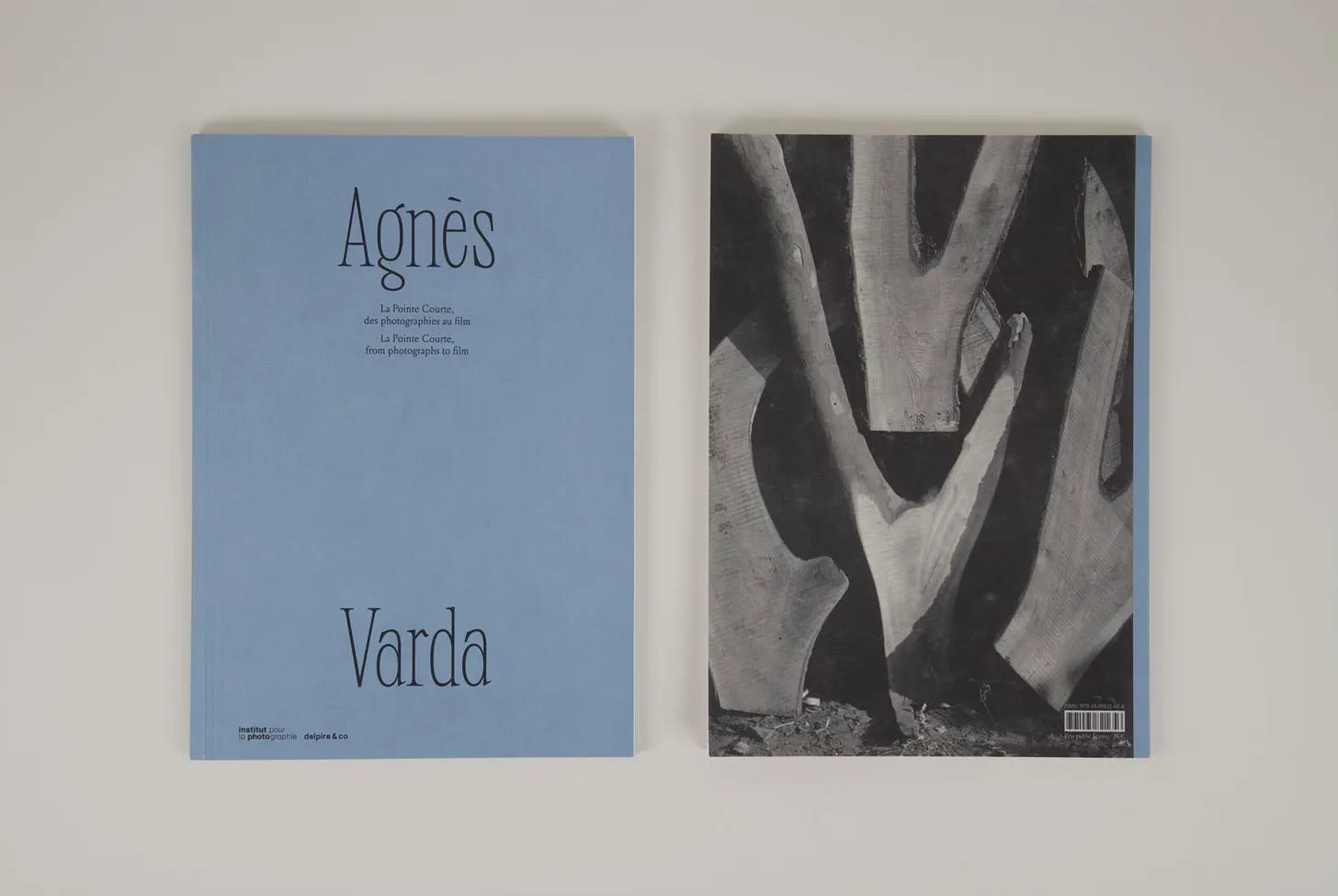
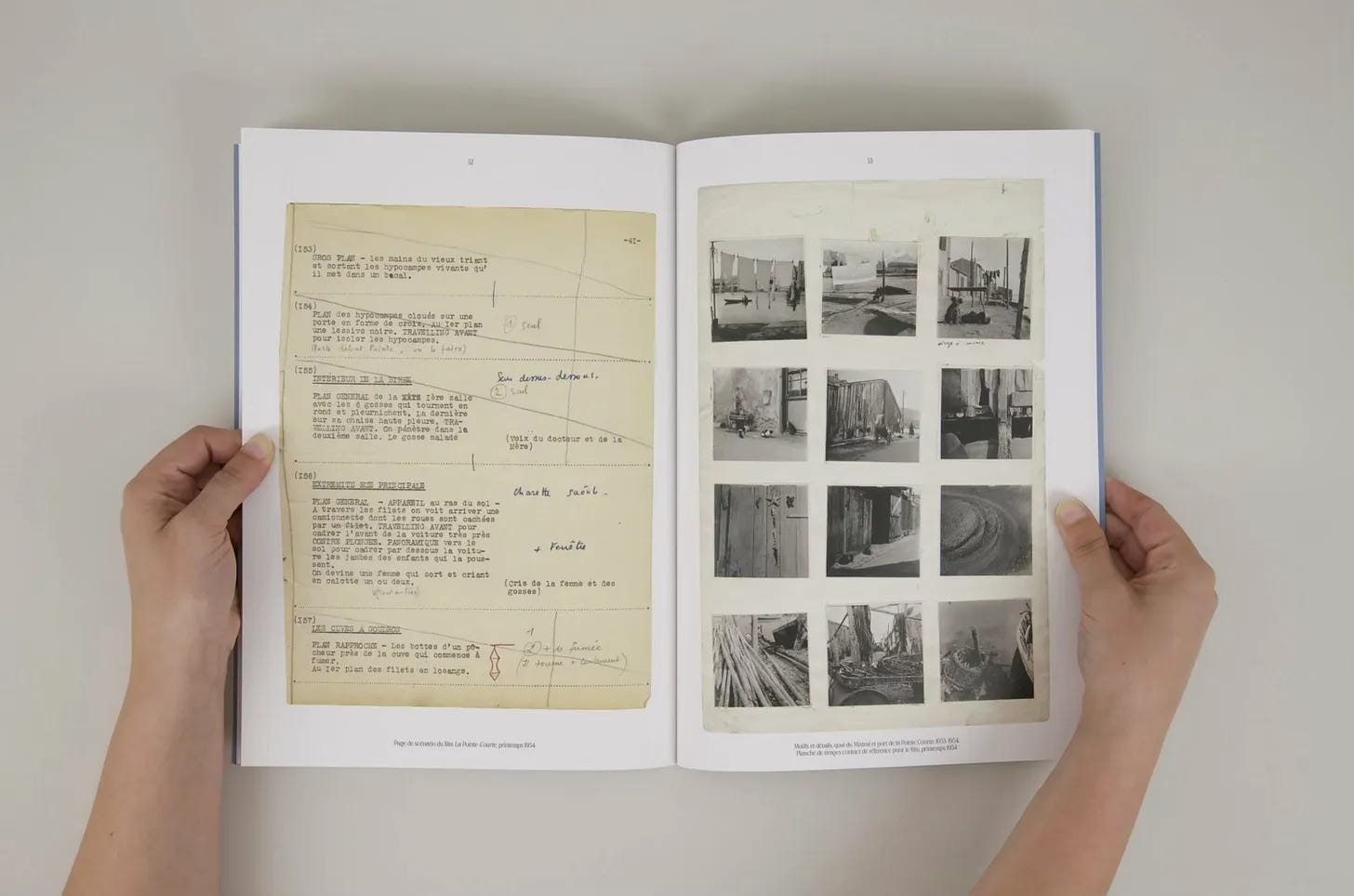
Parisian Agnès Varda photographed her youthful travels to Sète, France, from 1949 to 1954. To push herself even further creatively, Varda pieced together her first feature film, La Pointe Courte. She casted everyone and selected the locations, props, and wardrobe based entirely on her photographs. Every aspect of it is moving! [Originally posted here.]
A couple of months ago, I finished the thrilling novel, I Am You, and I want to tell everyone about it!
Author Victoria Redel (another “V”) crafted this fictional story based on the real 17th-century Dutch painter, Maria van Oosterwijck. The perspective is told from van Oosterwijck’s maid, Gerta, who came into the artist’s life as her family’s farm help—although she was disguised as a boy named Pieter.
The novel had me hooked instantly, and its themes of art, gender, sexuality, identity, and place kept me along for the rollercoaster of events. It’s also a deeply researched story about mixing pigments to create art and social class in Amsterdam at the time. You have to read it!
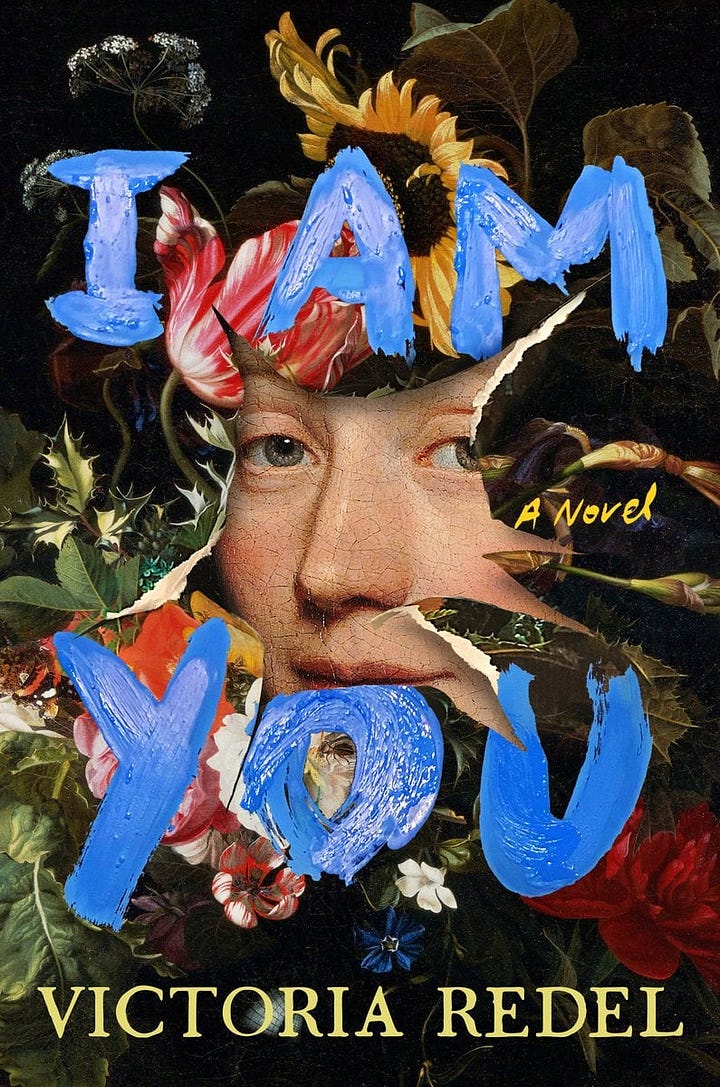
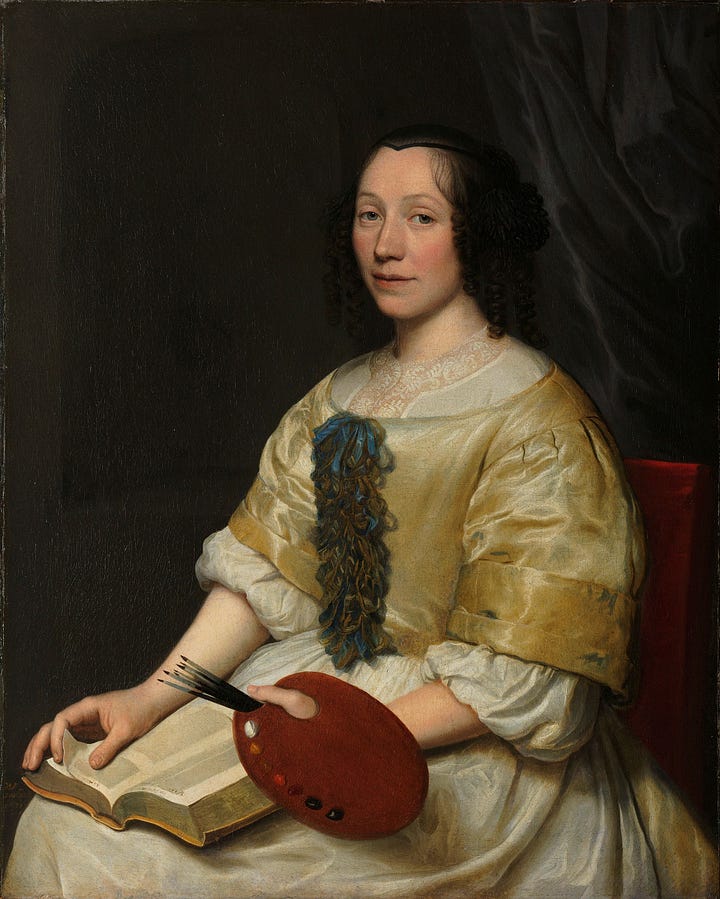
I Am You by Victoria Redel; Maria van Oosterwijck Flower painter, 1671, Wallerant Vaillant c/o Heritage Images via Getty Images


**
Kelsey Rose
I didn't realize you could visit her recreated apartment! I went to the exhibition that the Centre Pompidou had last year and I really enjoyed learning about her and seeing her work. Adding her studio to my list.
This is such a fantastic read! Sad that your memory card corrupted while in the apartment, but how special to have visited.