

Hedda Sterne: an artist who hiked to the pinnacle of modernism mountain
❥ Absolument's Dictionary of Modern Art - Spending springtime learning about modern artists and art movements, together.
❥ This email may be truncated in your inbox. To make sure you are reading the entire post, please move yourself along to a web browser!
Website | Instagram | Shop Absolument | Book Recs
If you enjoy this writing and imagery, would you mind liking, commenting, or sharing it with a friend?
Every week from February through May, I’ll be sharing a supplementary newsletter for my paid subscribers: Absolument’s Dictionary of Modern Art. Each writing will focus on an artist or movement from the modern era, mimicking entries of a dictionary or encyclopedia. You can read more about the series in this introductory newsletter.
Will you join me in learning about modern artists? I hope you will!
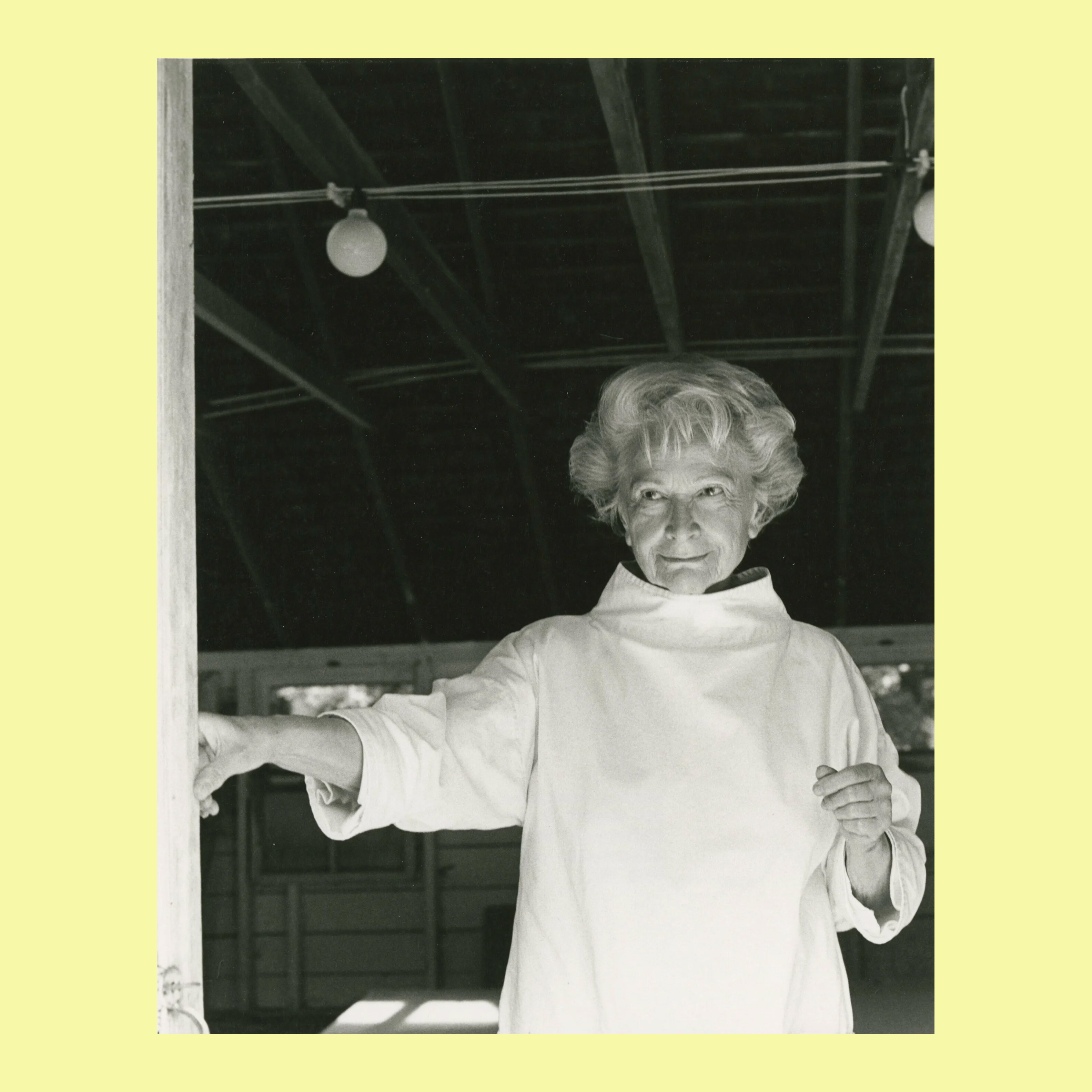
Hedda Sterne
b. 1910 in Bucharest, Romania | d. 2011 in New York City, USA
Happy Women’s History Month!
I asked Tatum Dooley, who writes the energetic newsletter Art Forecast (I definitely recommend subscribing), if she’d like to launch us into the universe of Hedda Sterne. Wonderfully, she replied in a way I didn’t anticipate, asking if she could experiment with creative writing. Absolutely! What came of it was the most perfect enhancement of Hedda’s world, making her and her art feel even more entrancing. Plus, it had a serendipitous connection with what I had already written below. Thank you, Tatum!
A letter home
Looking out Hedda Sterne’s window
I’ve stepped into a surrealist daydream. We just arrived safely in New York City, but this might as well be the moon as far as I’m considered. If Morandi said ‘nothing is more abstract than reality,’ then I have to argue: nothing is more surreal than New York.
Next door, an eccentric collector has invited me into the fold. Just yesterday, we took a joyride in her Ford, and I went straight to the studio to paint—the roads, the elevated trains, the constant frisson in this city of industry. Last week, Peggy invited me to lunch, where I was seated between Mr. Mondrian and Max Ernst. I took to playfully calling him Max-Max, and we unfortunately both bonded over the trauma of the war. Thankful to be here in New York, dining under chandeliers and enjoying lox, but missing home.
Can you imagine? Me next to all of the greats I’ve always read about and holding my own.
When I’m not schmoozing with the greatest artists of this generation, I’m painting, of course. I spend most of my time indoors, looking out. This is an apt metaphor for how I feel in this new place, but nevermind that. The light coming in through the window at 3 o’clock, the infinity of tiles in the bathroom mirror, the housing complex across the way with lights that blink on and off like an elevator panel. Everything here has my attention.
This creative exercise reminded me of a three-part newsletter series I created last year, Writing about art with your friends, where groups of writers came together with me to write fictional stories about paintings I assigned.
I’m thinking about doing a fourth part soon…let me know if any of you are interested in writing!


Hedda at the top of modernism man mountain
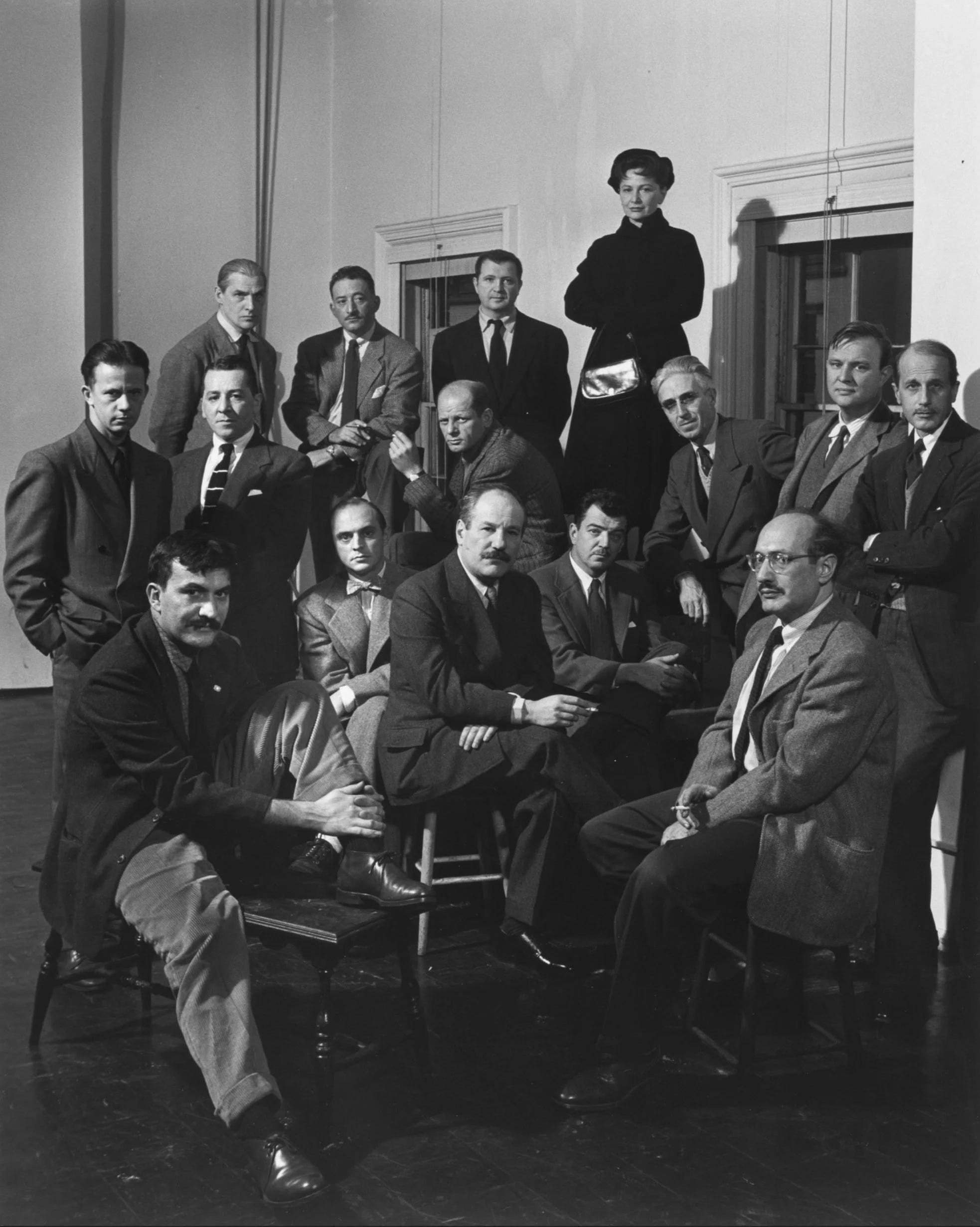
In the pages of Life magazine’s June 1951 issue lies a captivating black-and-white photograph: a group portrait of fifteen important-looking bodies staring down a centralized camera. The picture is a collage of men in suits, primed to intimidate the viewer. At the very top of the assemblage of men is a short-haired woman with an equally confident gaze. She’s fashioned in all black and her leather pocketbook glistens while hanging from her crossed arms. The shadow behind her held its own strong presence, acting as reinforcement, though she didn’t need it.
The woman is Hedda Sterne, an active artist in what would soon be known as the New York School; the picture has since been recognized as an artwork in its own right, “The Irascibles.” Surrounding her is a mountain of modernist painters and sculptors—her peers. Jackson Pollock is seated beneath her and to the left, poised perpendicular to the camera with a cigarette in hand. Willem de Kooning is in the top left corner, flanked by Robert Motherwell toward the right. Ad Reinhardt and Mark Rothko are there, too.
Hedda was questioned frequently about this photograph, telling an interviewer, “I am known more for that darn photo than for eighty years of work. If I had an ego, it would bother me.” For the sake of Hedda’s legacy, let’s learn about the eight decades of her work.
Sterne’s oeuvre reflects an exceptionally long and constantly evolving artistic life defined by experimentation, rather than a recognizable style anyone of us can pinpoint. Hedda was born in Bucharest in 1910 and, in her twenties, was already running with the avant-garde Surrealist crowds, exploring chance, dream states, and the subconscious through collage and automatic drawing. She immigrated to New York City in 1941 and began her association with the artists who would eventually become known as the New York School.
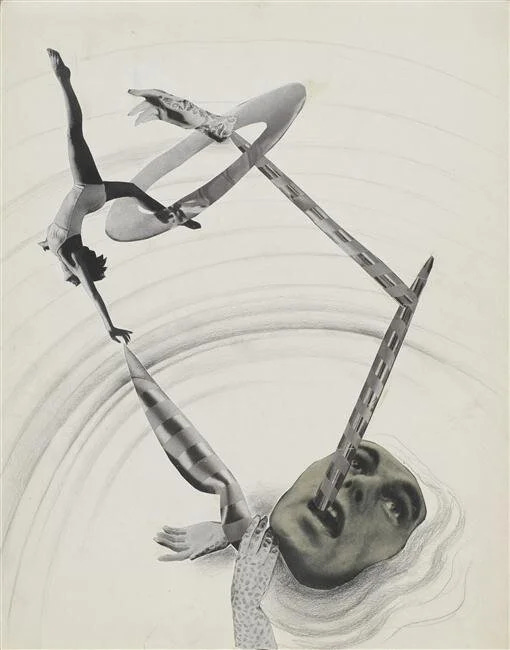
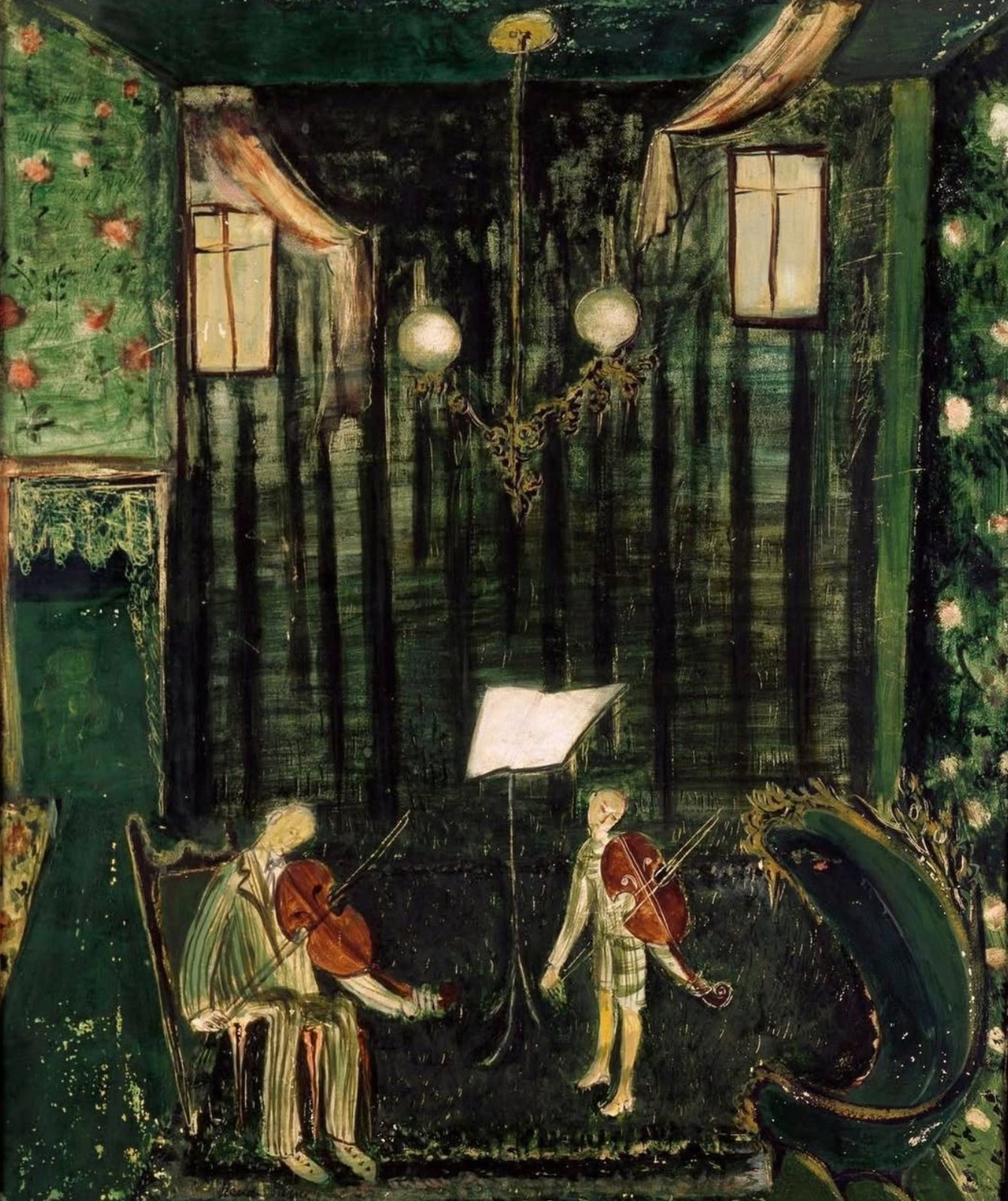
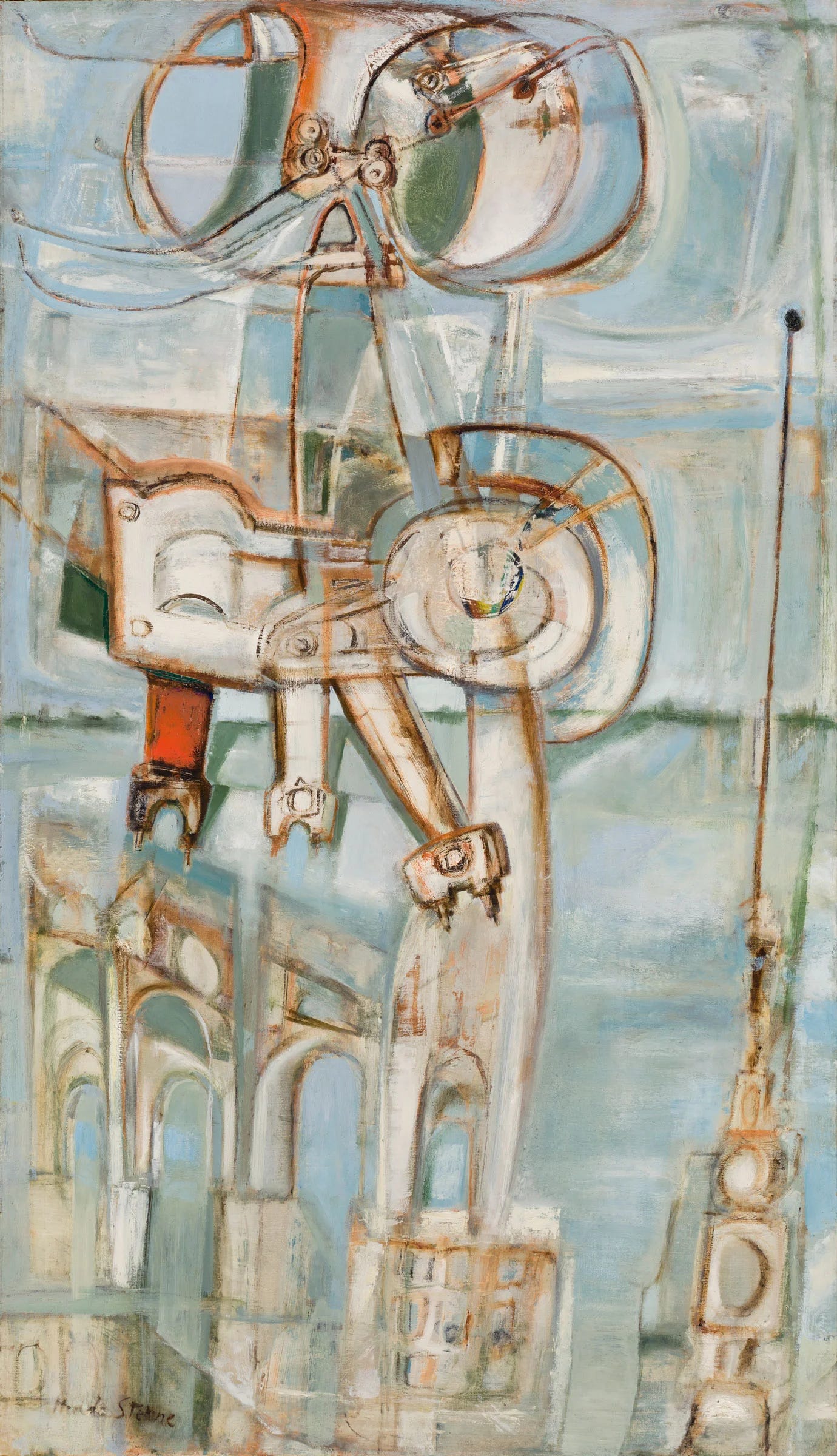
In the following decades, Hedda and her art shifted continuously. Landscapes, abstracted forms, portraits—whatever piqued her curiosity and allowed her to test new ideas and visual languages. What it felt like—to Hedda and to us admirers—is that this artist was hyper in-tune with exploring her thoughts, expressions, artistic media, and experiences.
The Art Story describes her art/life trajectory: “While never conforming to stylistic mandates, Sterne's artistic path touched upon many of the postwar styles but in a way that was quieter, more thoughtful, even stranger than what was expected by critics and the public.”
Eight decades of “strange” wondrousness! You can learn more about her backstory here and here.
Hedda’s gazes of 1970
I discovered a press release for a Hedda Sterne solo-exhibition titled Everyone, held at the Betty Parsons Gallery in 1970. This was exactly two decades after Hedda posed for Life magazine with her mountain of men.
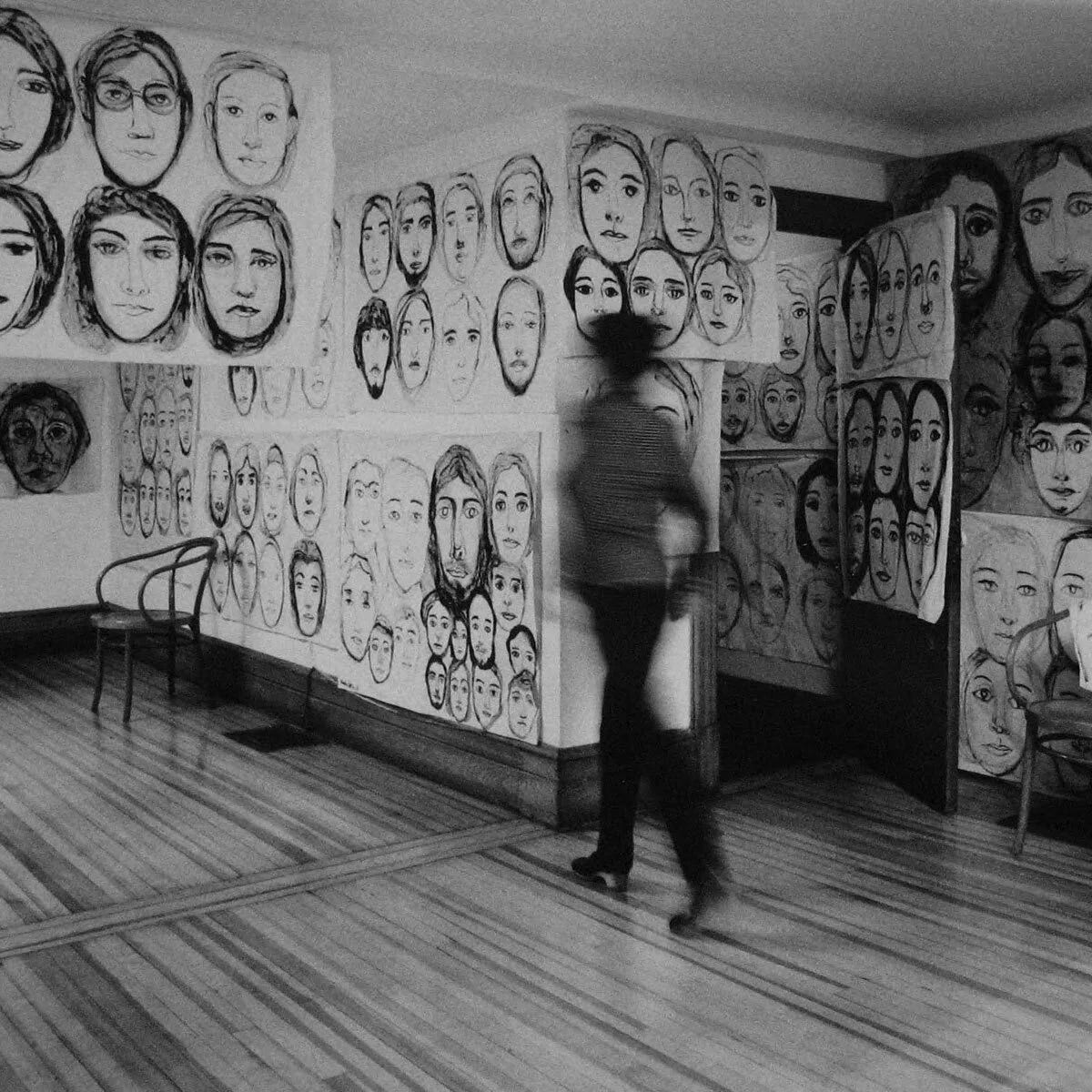
From the press release: