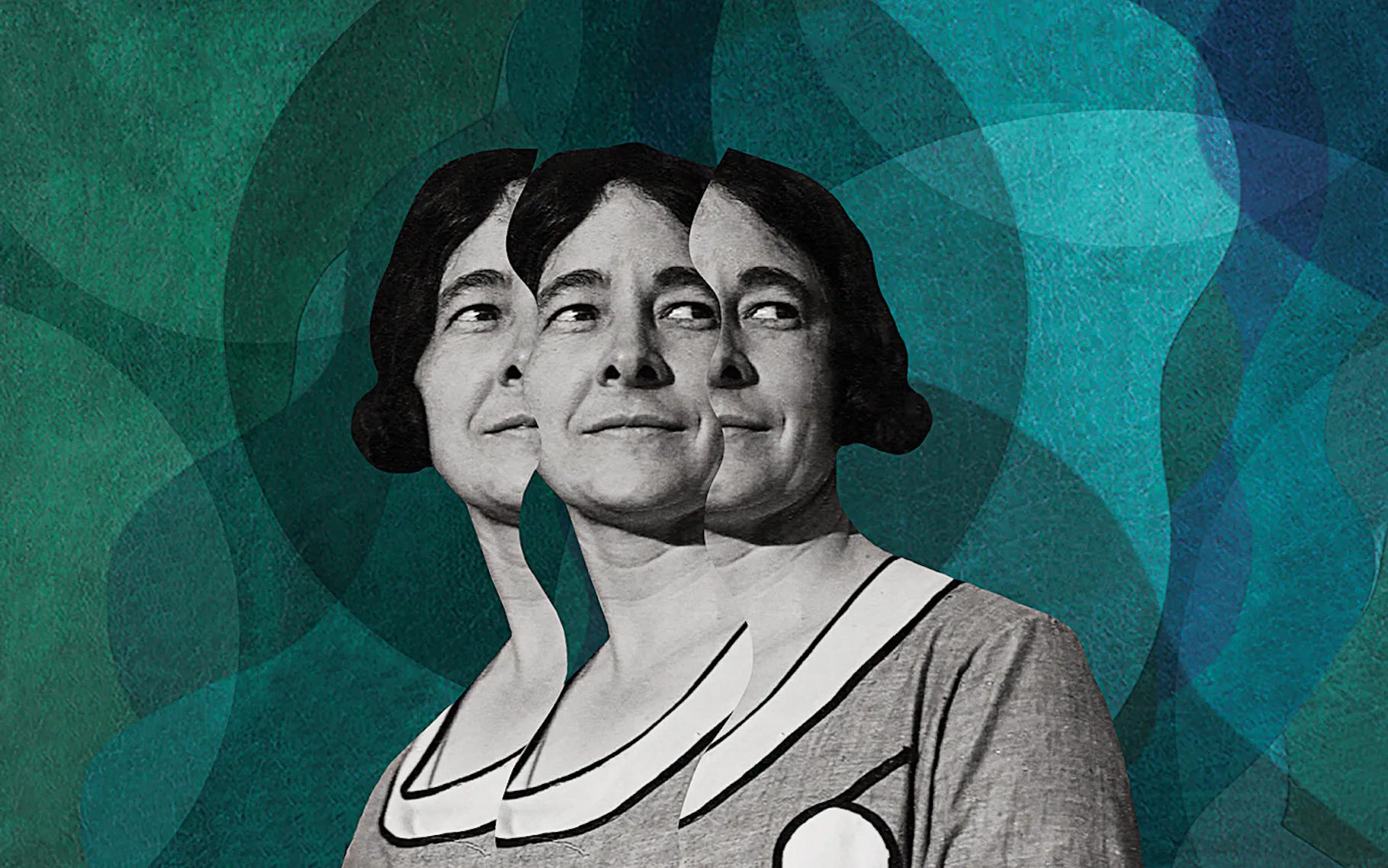
Georgia O'Keeffe: Mothering the desert and secretly sistering a painter
❥ Absolument’s Dictionary of Modern Art - Spending springtime learning about modern artists and art movements, together.
❥ This email may be truncated in your inbox. To make sure you are reading the entire post, please move yourself along to a web browser!
Website | Instagram | Shop Absolument | Book Recs
If you enjoy this writing and imagery, would you mind liking, commenting, or sharing it with a friend?
To my wonderful paid subscribers,
I hope I’m not breaking my promise or disappointing any of you by stretching my dictionary series out a little longer than anticipated! The remainder of the dictionary will continue from now on—with lots of enthusiasm—at a pace of 2-3 newsletters per month, instead of 1-2 per week. I want to give readers a little breathing room and to be able to explore my other interests without overwhelming inboxes. The bright side is that we’ll be spending spring AND summer time learning about modern artists together!
To all readers,
In between these dictionary entries, you’ll have access to free Absolument newsletters about contemporary art happenings, artist homes, architecture I visited all around Milan recently, books, and other aspects of design that are pulling at my heartstrings.
Thank you endlessly for your support and excitement over these artists!
- Kelsey
**
Read more about the series in an introductory newsletter
and read the entire dictionary.
Will you join me in learning about modern artists?
**
Georgia O’Keeffe, as introduced by Dee:
b. 15 November 1887 in Sun Prairie, Wisconsin | d. 6 March 1986 in Santa Fe, New Mexico
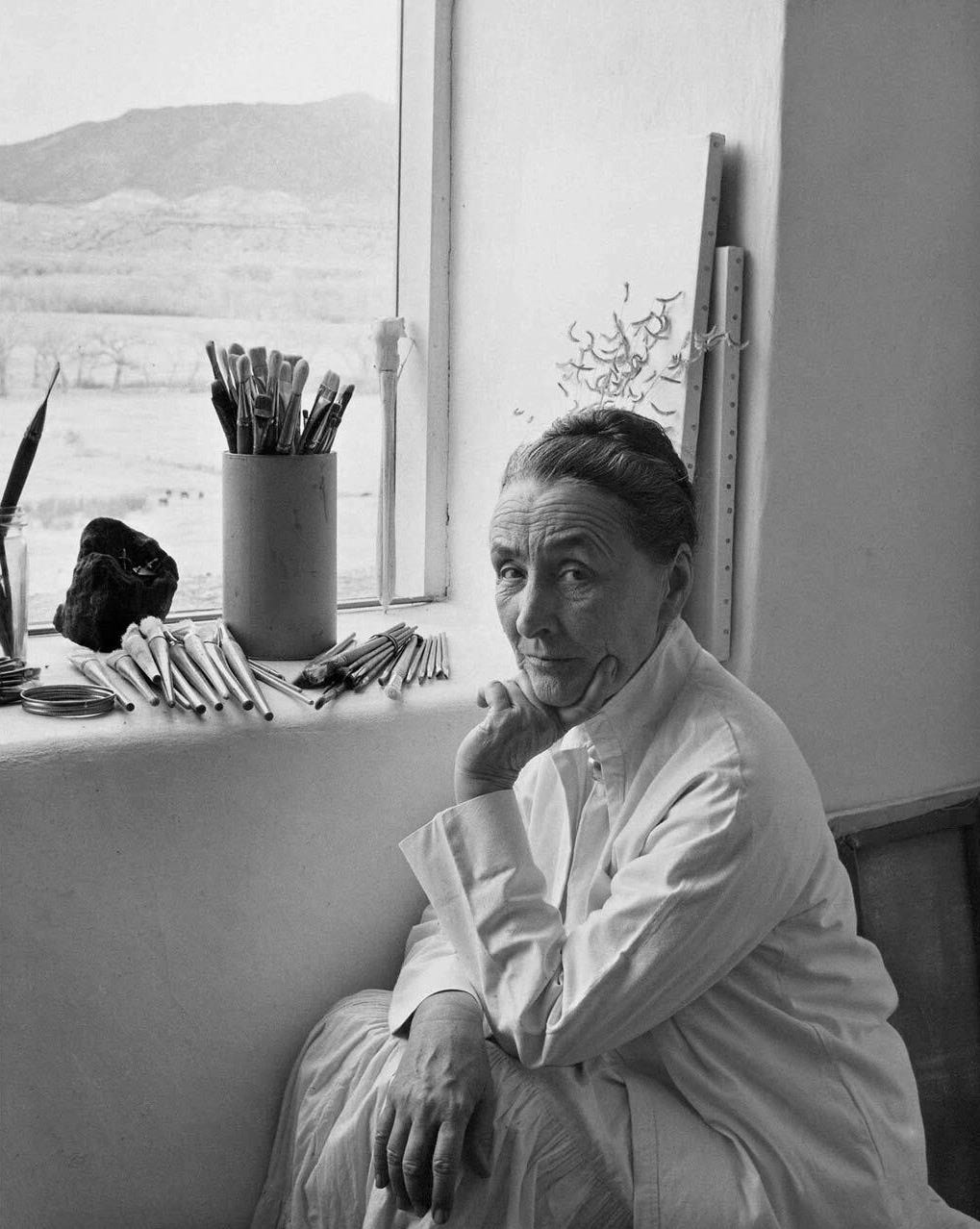
Dee Jasinska, the author of the newsletter Vibes Digest, is taking over the first half of our Georgia O’Keeffe dictionary entry. She’s written a couple of really fantastic newsletters about O’Keeffe’s home and indirect lessons from the artist on how to train your visual eye, so her lens is Georgia-sharpened!

Georgia O’Keeffe’s modern nature
The unexplainable thing in nature that makes me feel the world is big far beyond my understanding–to understand maybe by trying to put it into form. To find the feeling of infinity on the horizon line or just over the next hill.
Called the mother of American modernism, Georgia O’Keeffe was something more precise than that: a painter who made nature modern. She translated her emotional response into shape and colour, creating, in her own words, “an equivalent for what she felt about what she was looking at” rather than copying it.
I’m always interested in how an artist comes to devote themselves to a subject—whether they are possessed by it from the beginning, or get there through a process of elimination. In Georgia O’Keeffe’s case, painting nature feels less like a choice than a homecoming.
She was born on a dairy farm in Sun Prairie and lived there until her teenage years. Growing up immersed in nature, she developed a relationship with it that only a childhood shaped by changing seasons, dependence on the land, and intimacy with weather can produce.
Her attachment to landscape was almost pantheistic; she often seemed to fall more deeply for places than for people and had a rare ability to come to terms with a landscape, to make it her own, until person and place became intertwined. She did this repeatedly: with the canyons of Texas, Lake George, and the deserts of New Mexico.
Her paintings may have been deeply personal, but she rarely wanted to translate them into language. She famously resisted explaining her art as critics projected meanings onto it. Yet in her early thirties, encouraged by the painter William Einstein, she began recording brief reflections on her work. Years later, these notes were discovered by her secretary, Virginia Robertson, and published by Penguin Books in 1976 in a volume simply titled Georgia O’Keeffe.
In the introduction, O’Keeffe wrote “Colours and shapes make a more definite statement than words. I write this [book] because such odd things had been done about me with words. (…) I am often amazed at the spoken and written word telling me what I have painted. I make this effort because no one else can know how my paintings happen”.
I hope you’ll enjoy these little postcards from her life as much as I did:
I. White Birch, 1925
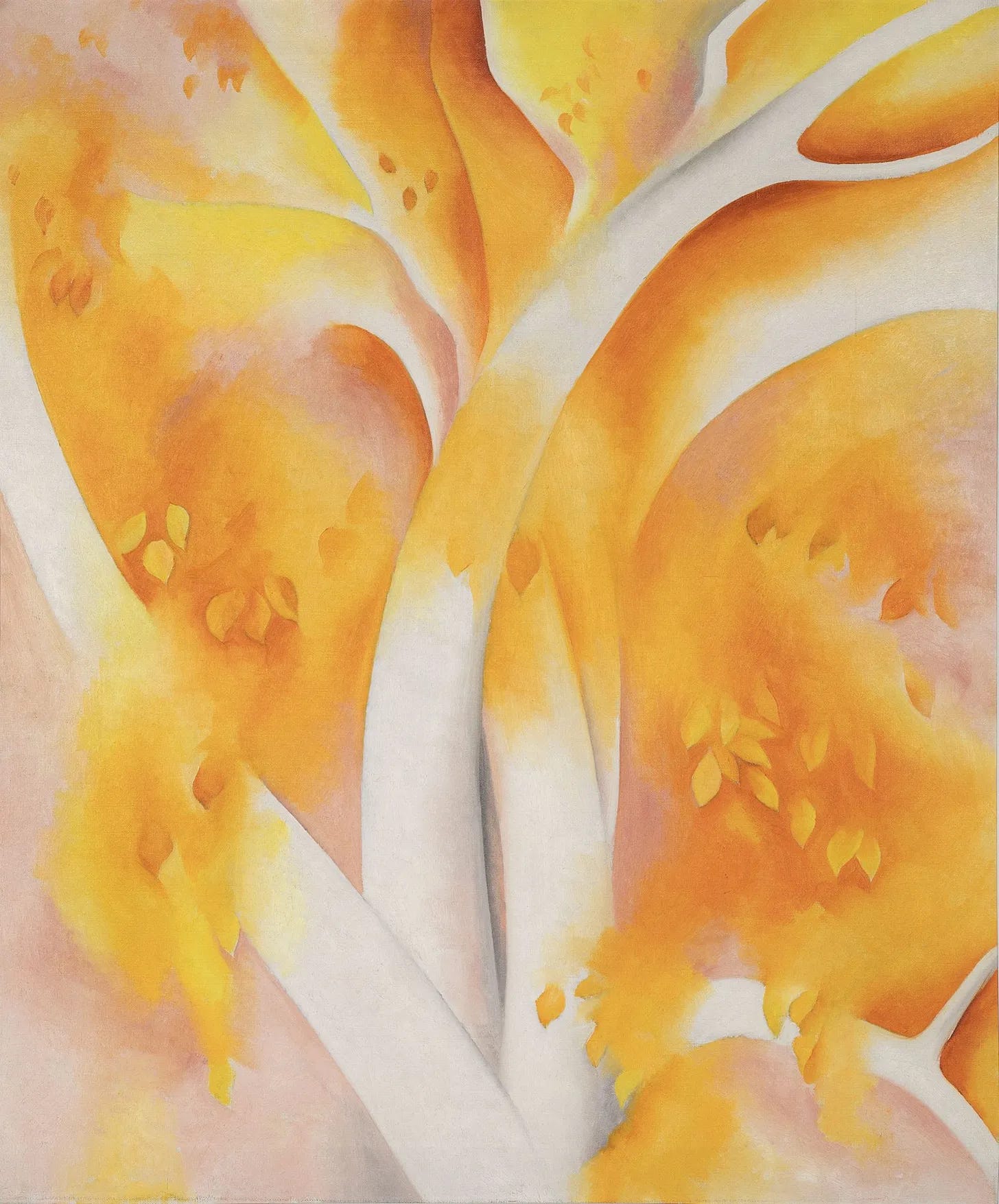
Painted at Lake George:
A little way from the dock there was a big old birch tree with many trunks. I have painted the foliage green and have painted it yellow many times. To see the tree at its best I was up early and out in the rowboat under the trees as the sun came up over the mountains across the lake. The trunks were whitest in the early sunrise—the foliage a golden yellow with a few leaves standing out sharply here and there.
II. D. H. Lawrence Pine Tree, 1929
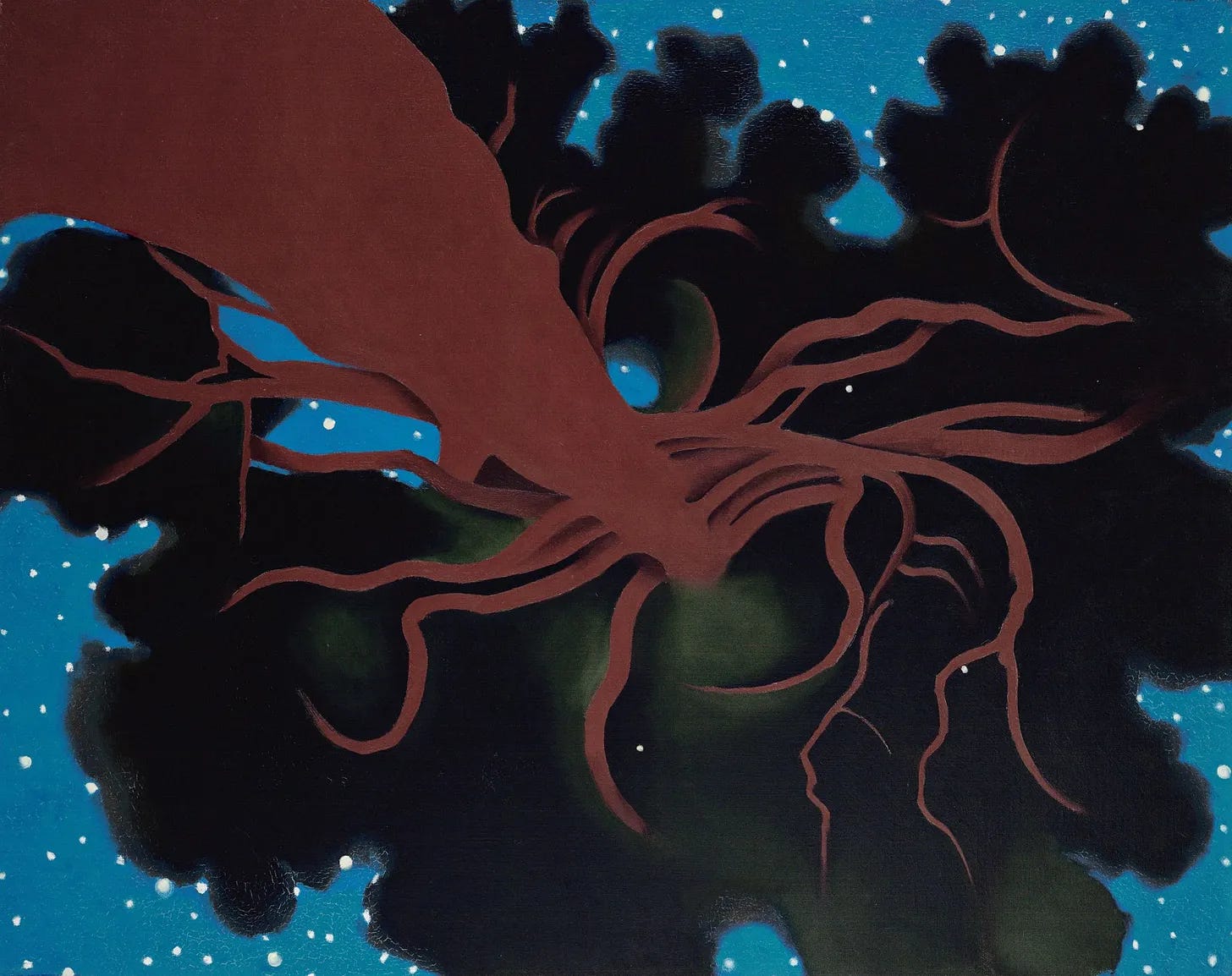
Painted in New Mexico:
I spent several weeks up at the Lawrence ranch that summer. There was a long weathered carpenter’s bench under the tall tree in front of the little old house that Lawrence had lived in there. I often lay on that bench looking up into the tree—past the trunk and up into the branches. It was particularly fine at night with the stars above the tree.
III. Ram’s Head, White Hollyhock, 1935
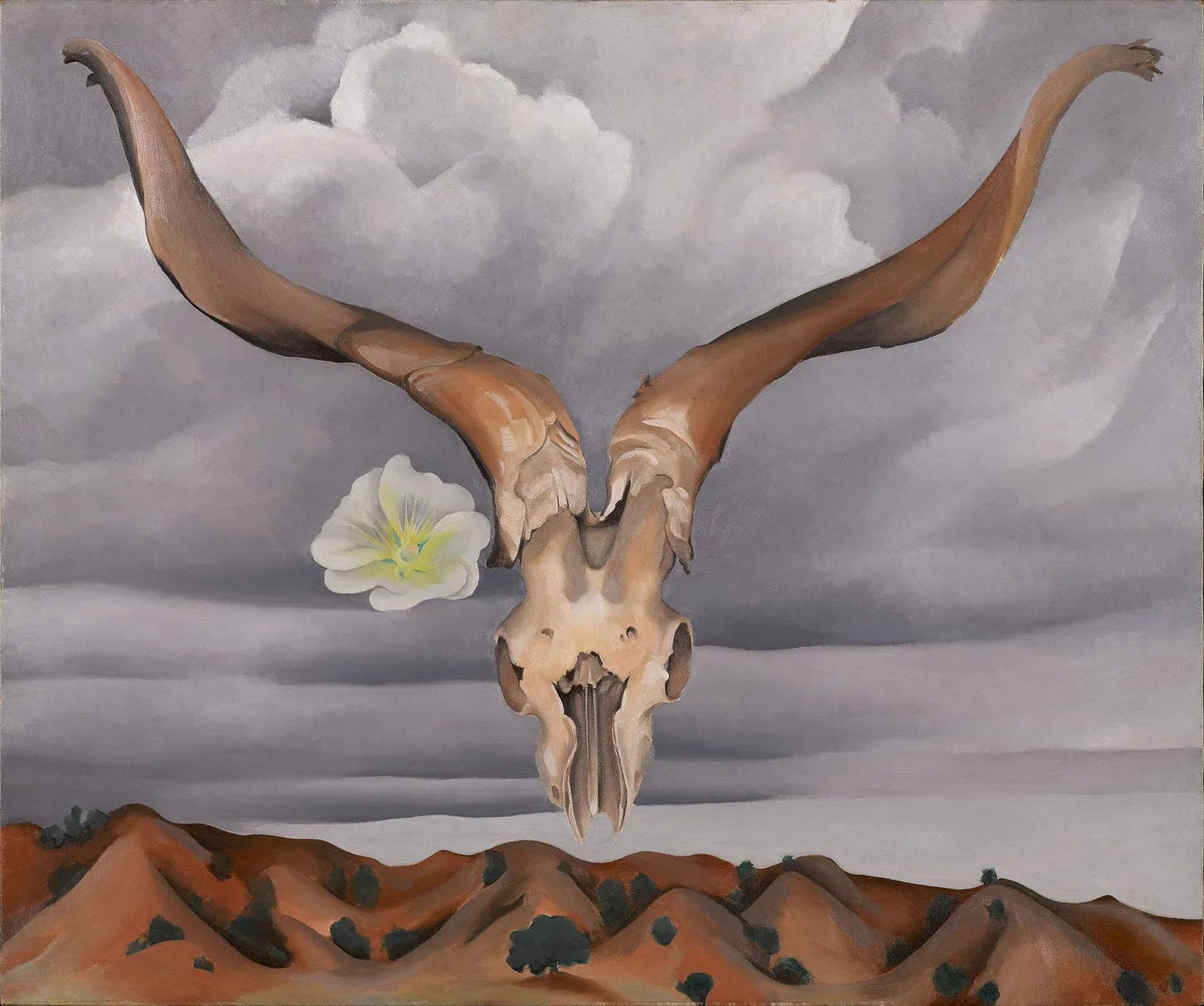
Painted in New Mexico:
The rows of little hills under the Ram’s Head at Ghost Ranch must have been formed by thousands of years of erosion by wind and rain. The hills look soft and gentle but they are so steep and stubborn that there are only a few places where you can climb up or down, usually on the old cattle trails. They seem small because the cliff that they washed from is so high and the distance they are washing away to is so wide. The trees on those hills are very old. They are really small trees—very dry and stiff and prickly.
I had looked out on the hills for weeks and painted them again and again—had climbed and ridden over them—so beautifully soft, so difficult. (Sometimes I pulled the horse, sometimes the horse pulled me.) I had painted those hills from the car in bright sunlight and had failed dismally but I could see them—farther away—from my window in the rain. So I tried again. They seemed right with the Ram’s Head.
I don’t remember where I picked up the head—or the hollyhock. Flowers were planted among the vegetables in the garden between the house and the hills and I probably picked the hollyhock one day as I walked past. My paintings sometimes grow by pieces from what is around.
Thank you, Dee, for your contribution!
You can subscribe to her newsletter below:

**
A little way in which Georgia sneaks into my daily life:
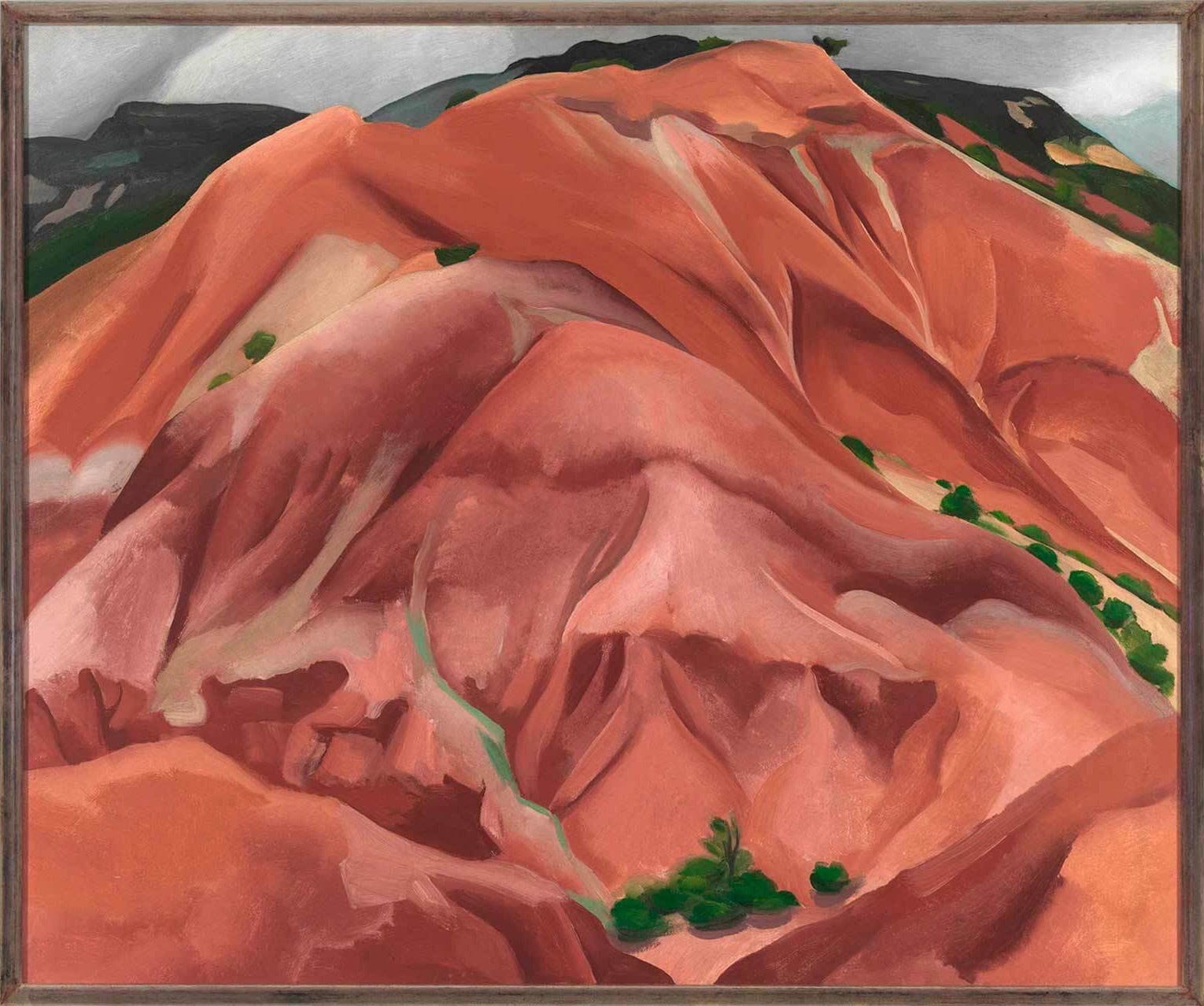
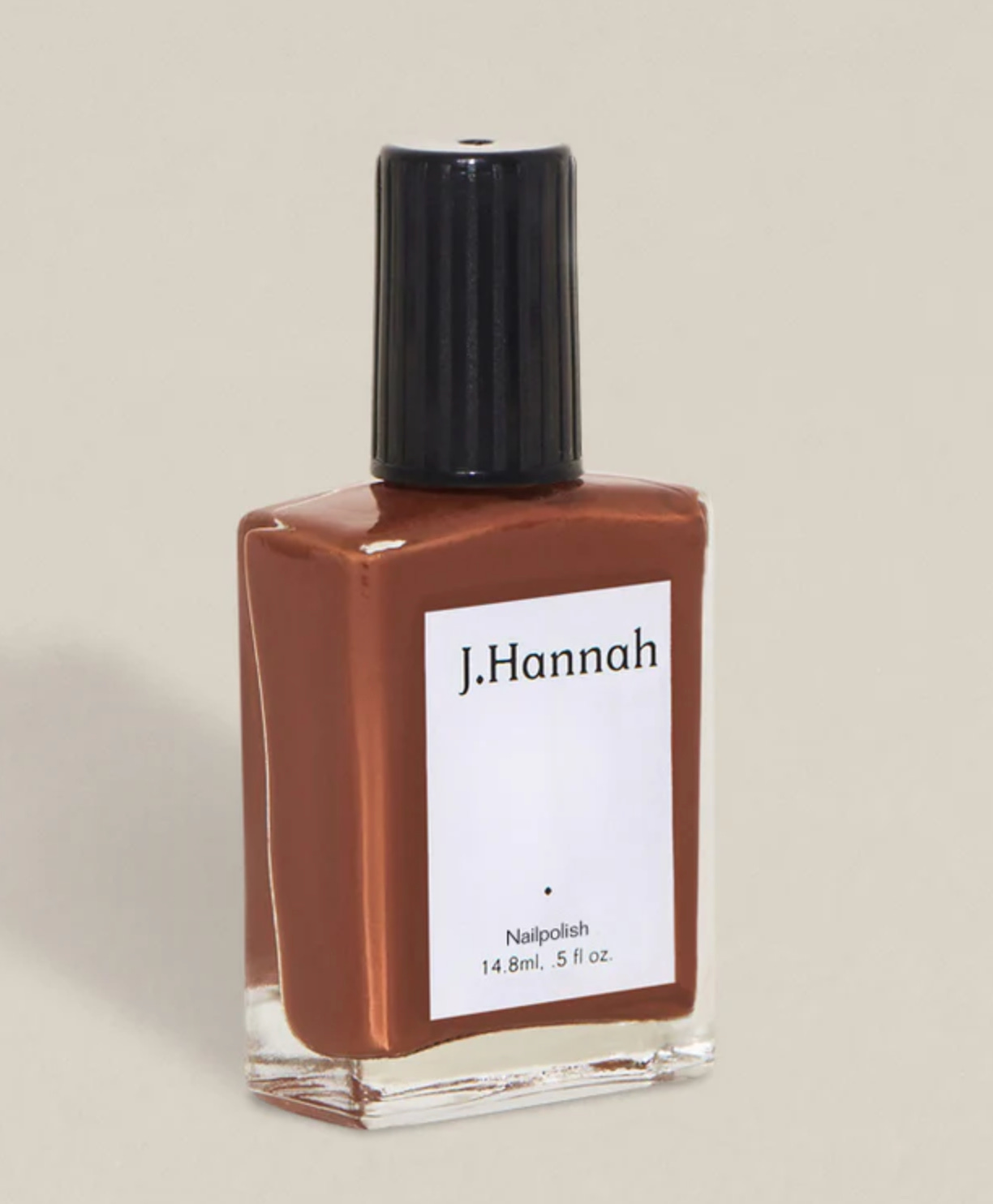
For a few years, I constantly painted my nails in J. Hannah’s Eames color—a chartreuse-adjacent green—until I met the color Ghost Ranch, inspired by Georgia O’Keeffe’s life in the New Mexican desert.
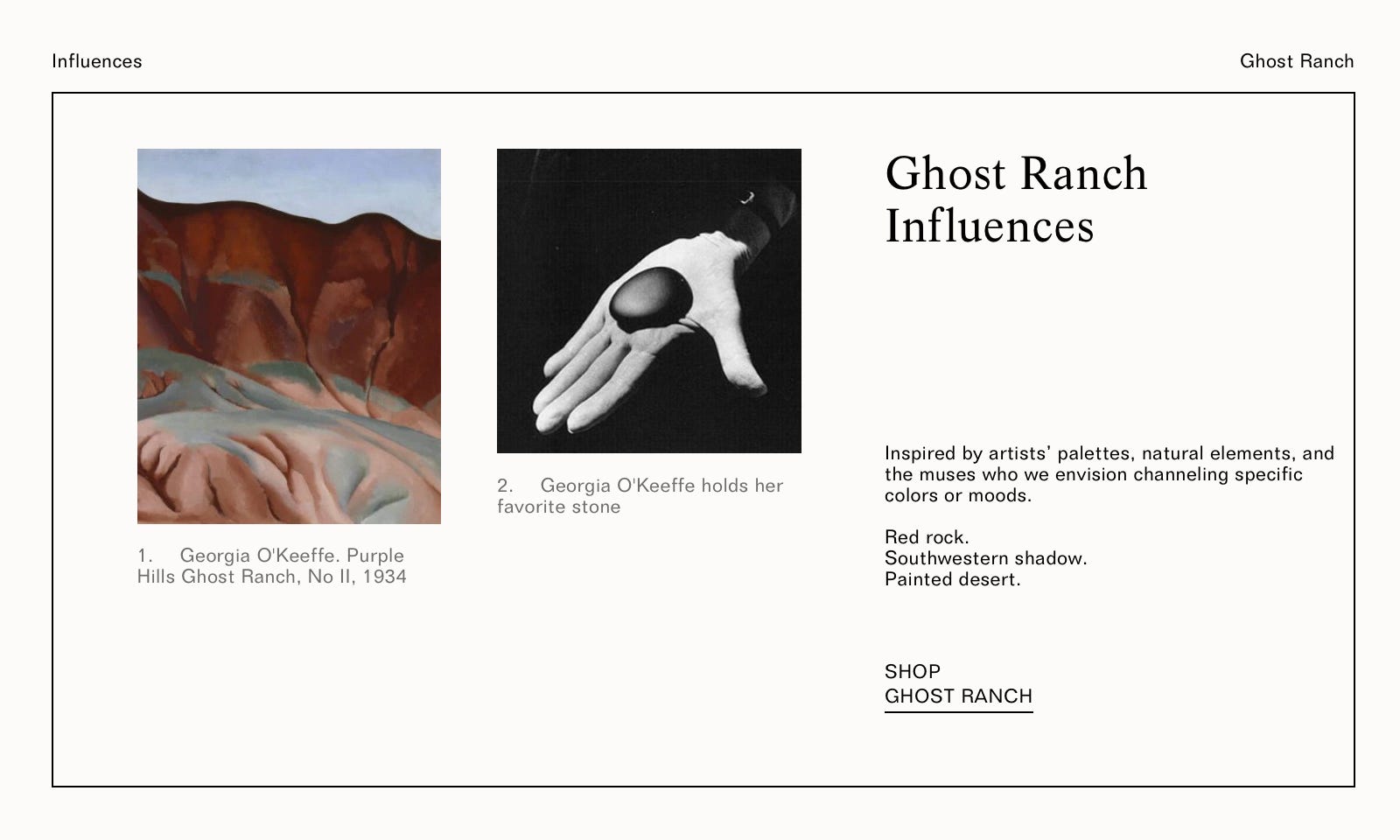
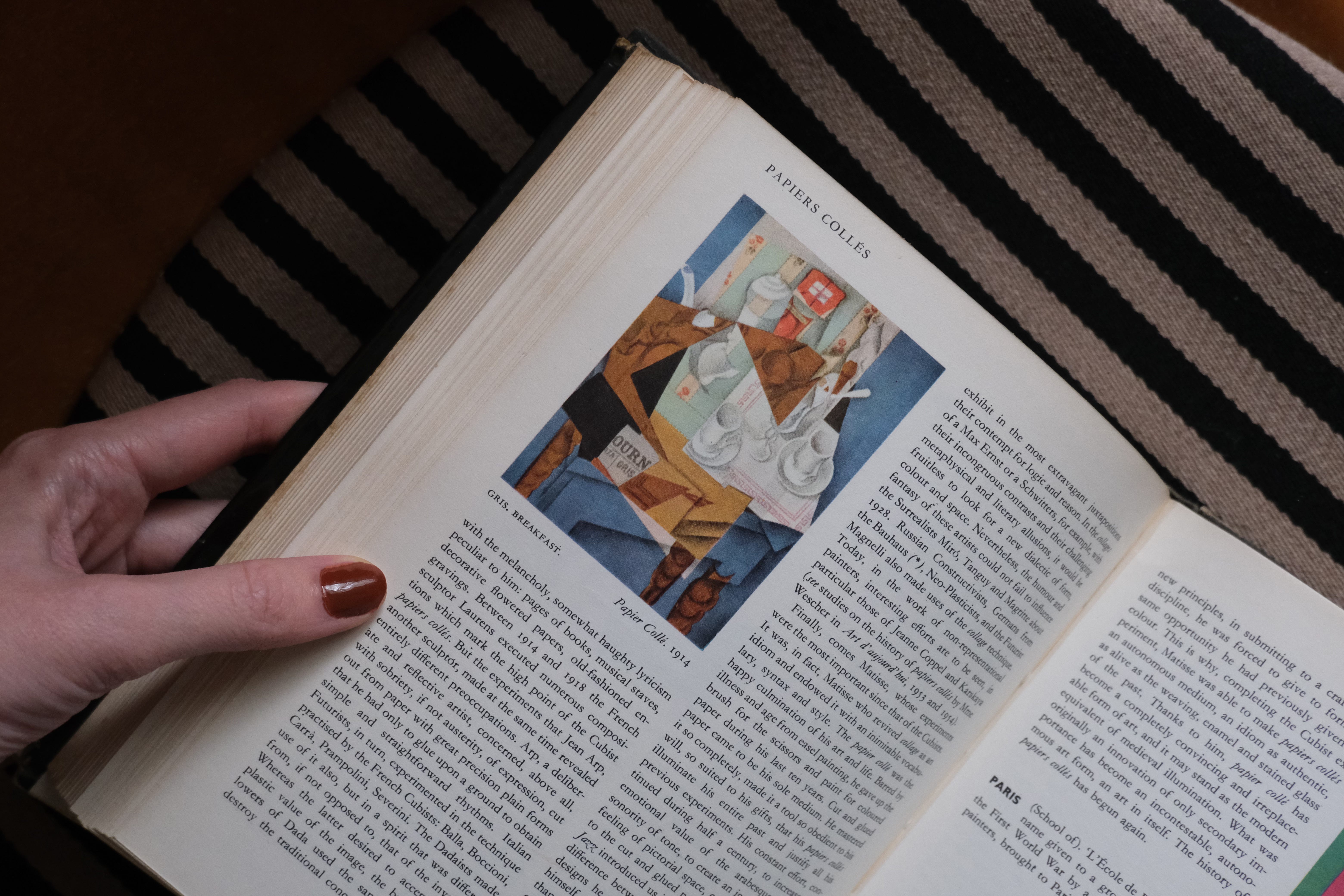
I also desperately want to read Georgia O’Keeffe: A Life by Roxana Robinson, a nearly 700-page tome about her relationships, accomplishments, pelvises, and years spent in the desert. Imagine how the Ghost Ranch nails will look while turning its pages—ah!
**
Did you know that Georgia had a younger sister, Ida, who was also a painter? The story has left me completely shocked! The following writing might be feel like the boldest unpopular opinion I’ve ever stated publicly.