

Bridget Riley painted the bridge between Pointillism and Op Art
❥ Absolument’s Dictionary of Modern Art - Spending spring and summer learning about modern art, together.

This email may be truncated in your inbox. To make sure you are reading the entire post, please move yourself along to a web browser!
Website | Instagram | Shop Absolument | Book Recs
If you enjoy this writing and imagery, would you mind liking, commenting, or sharing it with a friend?
❥ Absolument’s Dictionary of Modern Art is a 26-newsletter series for my paid subscribers, which packs the alphabet with entrancing modern artists and movements. Read more about the series in this introductory newsletter and see the entire dictionary here.
Will you join us in learning about modern artists?
**
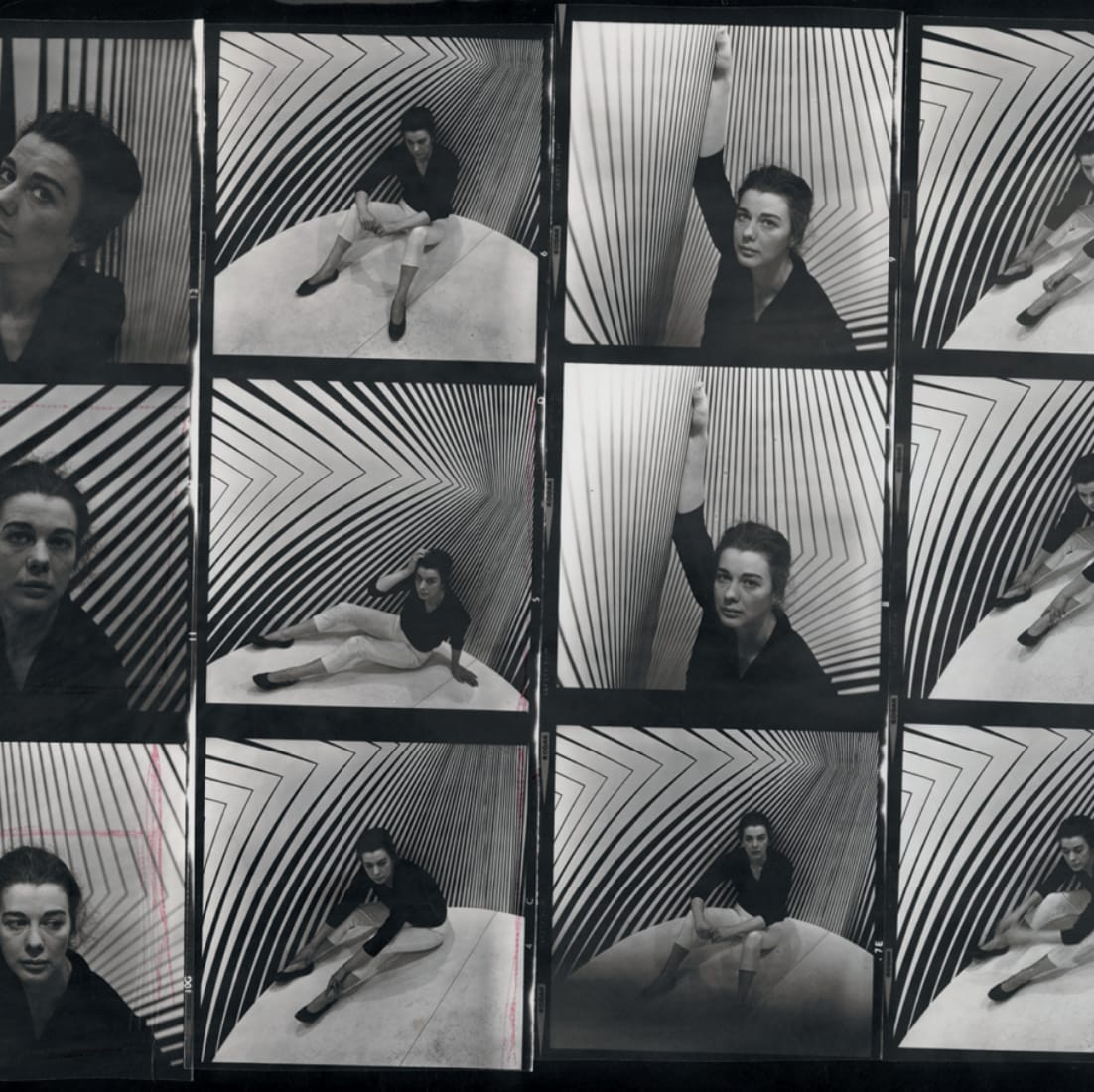
Bridget Riley
b. 24 April 1931 in London, UK | STILL ALIVE at 95-years-old, living between London and Cornwall, UK, and Vaucluse, France
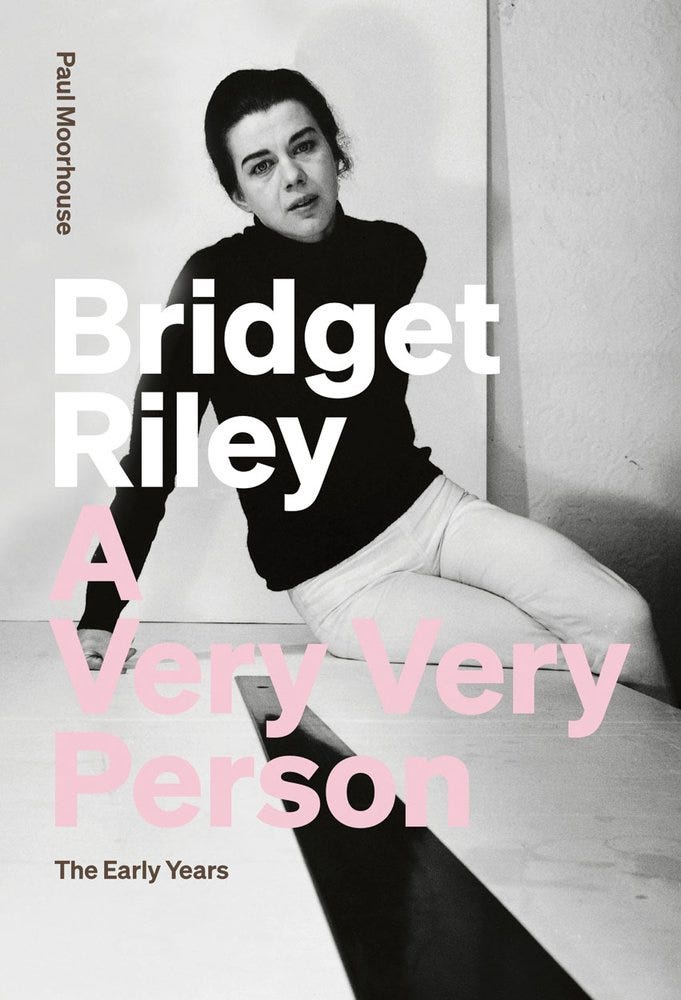
When she was a young girl, Optical Art painter Bridget Riley’s grandmother described her as a “very very person”—which also became the title of her biography written by Paul Moorhouse, Bridget Riley: A Very Very Person. Moorhouse wrote about Bridget’s childhood as being filled with “things taken to the extreme.” And as time continued, her art practice undoubtedly followed the same path.
**
Last fall, I had the chance to visit the Bridget Riley exhibition, Point de départ, at the Musée d’Orsay in Paris, which covered her early years and inspirations.1 Initially, I was pretty shocked to learn how she found her eventual style (becoming a leading figure of the Op Art movement). I didn't realize her work was so connected to the old Parisian Masters—mostly because her paintings and the paintings of men in the 1800s couldn’t be more different. While walking through the galleries of the Musée d’Orsay, I was so absolutely thrilled to realize how wrong I had been!
I had absolutely no idea that she drew much of her early inspiration and learning specifically from French Impressionist Georges Seurat. As an art history refresher: Seurat was the man who defined the Pointillism style—spotting canvases with seemingly unexpected colors to create recognizable forms from optical illusions. He was less interested in the dots themselves; he fixated on how vision works and how color is actually assembled by the eye.
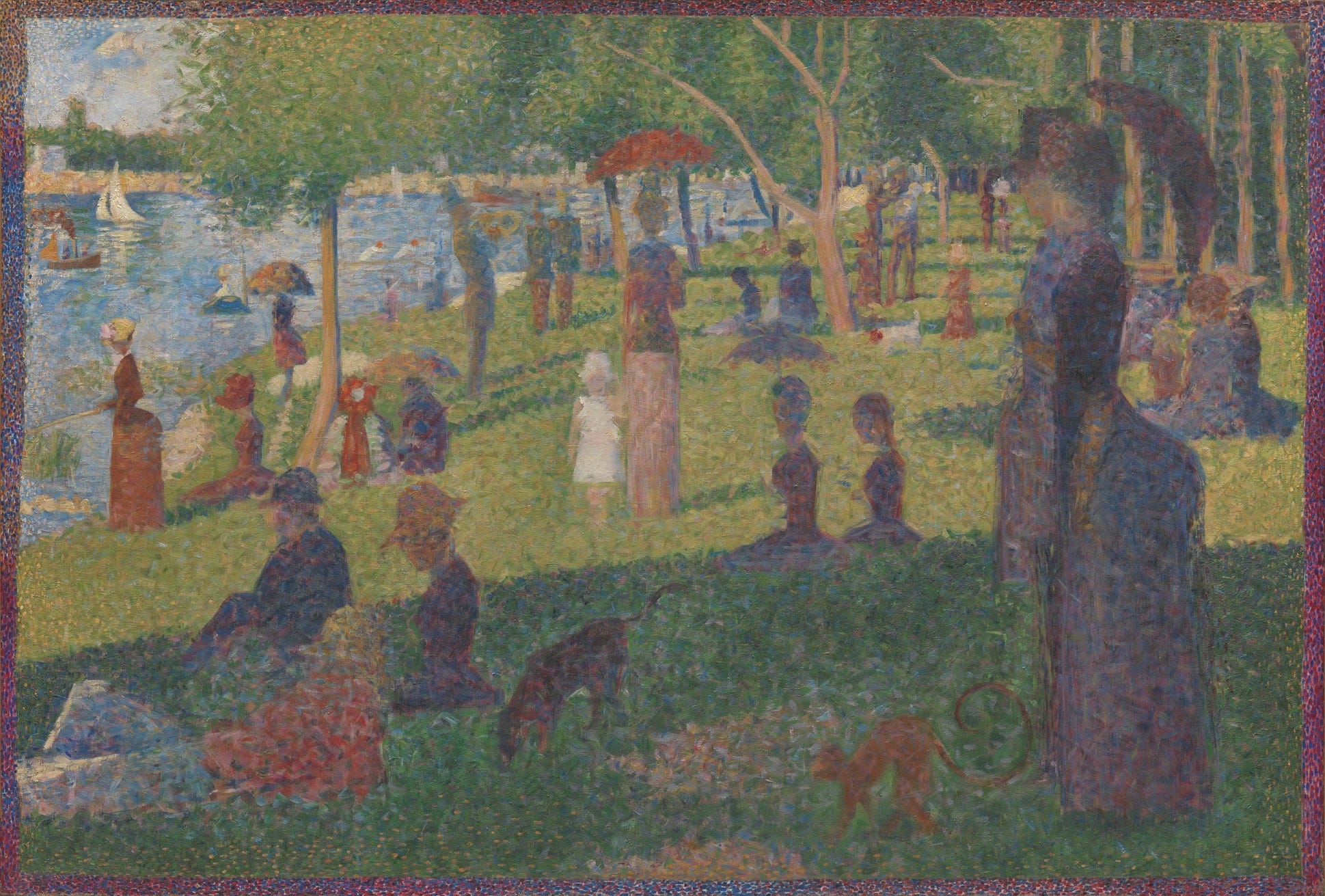
When you see Seurat’s painting above, and an example of Riley’s work below, how could they possibly be related? Seurat painted landscapes and garden scenes, people at leisure, the Eiffel Tower, and similar subjects in a collection of stippled pastel hues. They make you feel as though your eyes are a little fogged, and the world is a charming dream.
Riley’s art was either an explosion of bright colors or a contrast of black and white, angular and abstracted fragments. Very, very opposite from Seurat.

Riley’s first encounter with Georges Seraut’s paintings came in 1949, when, as an 18-year-old student, she began making regular visits to London’s National Gallery. There, she was struck by